The global agri-food system is both nature’s biggest threat and humanity’s greatest opportunity to halt and reverse nature loss. Businesses depend on nature for their success and nature-positive system transformation is essential to long-term resilience and competitiveness.
Even though the agri-food system is the largest driver of deforestation, water consumption, biodiversity loss and soil degradation, transforming it is also a key part of the global solution to climate change and food and nutrition security.
Nowhere are the fundamental connections across nature, climate and people clearer than on the farm, where all three must align to produce nutritious food to feed the growing population.
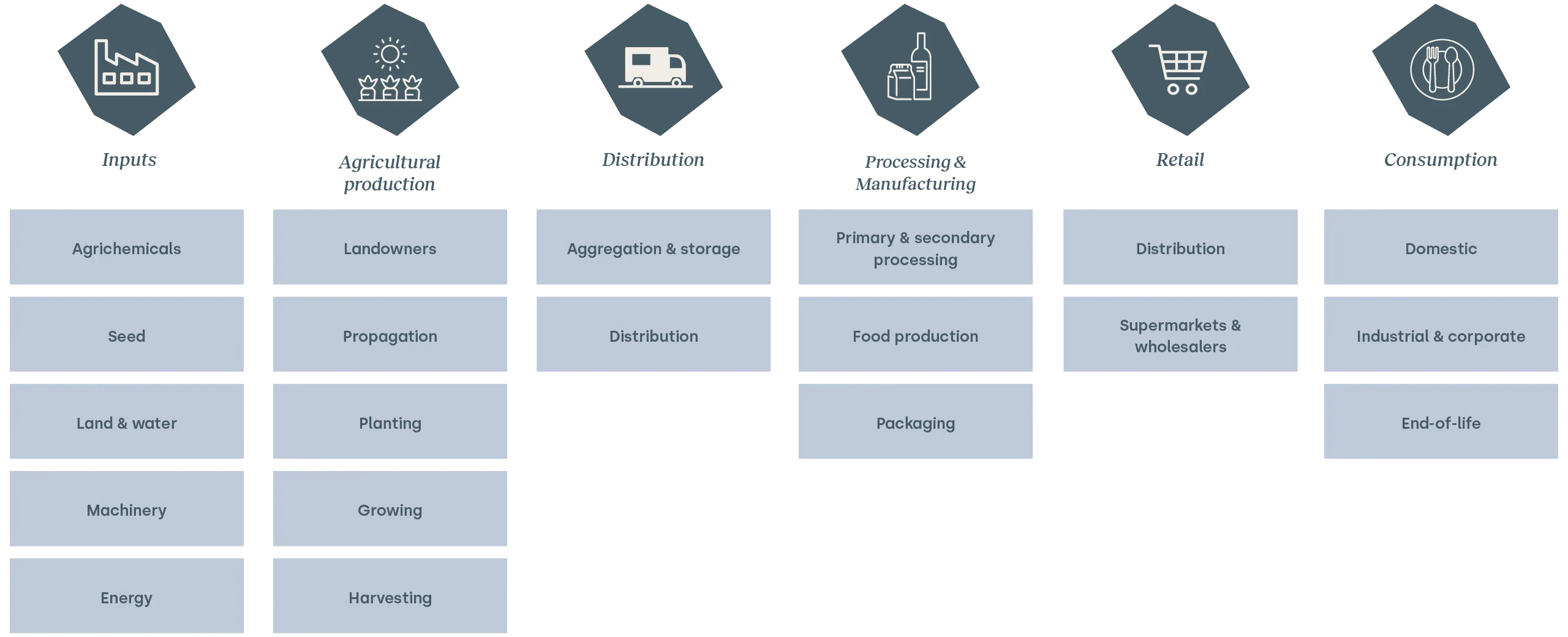
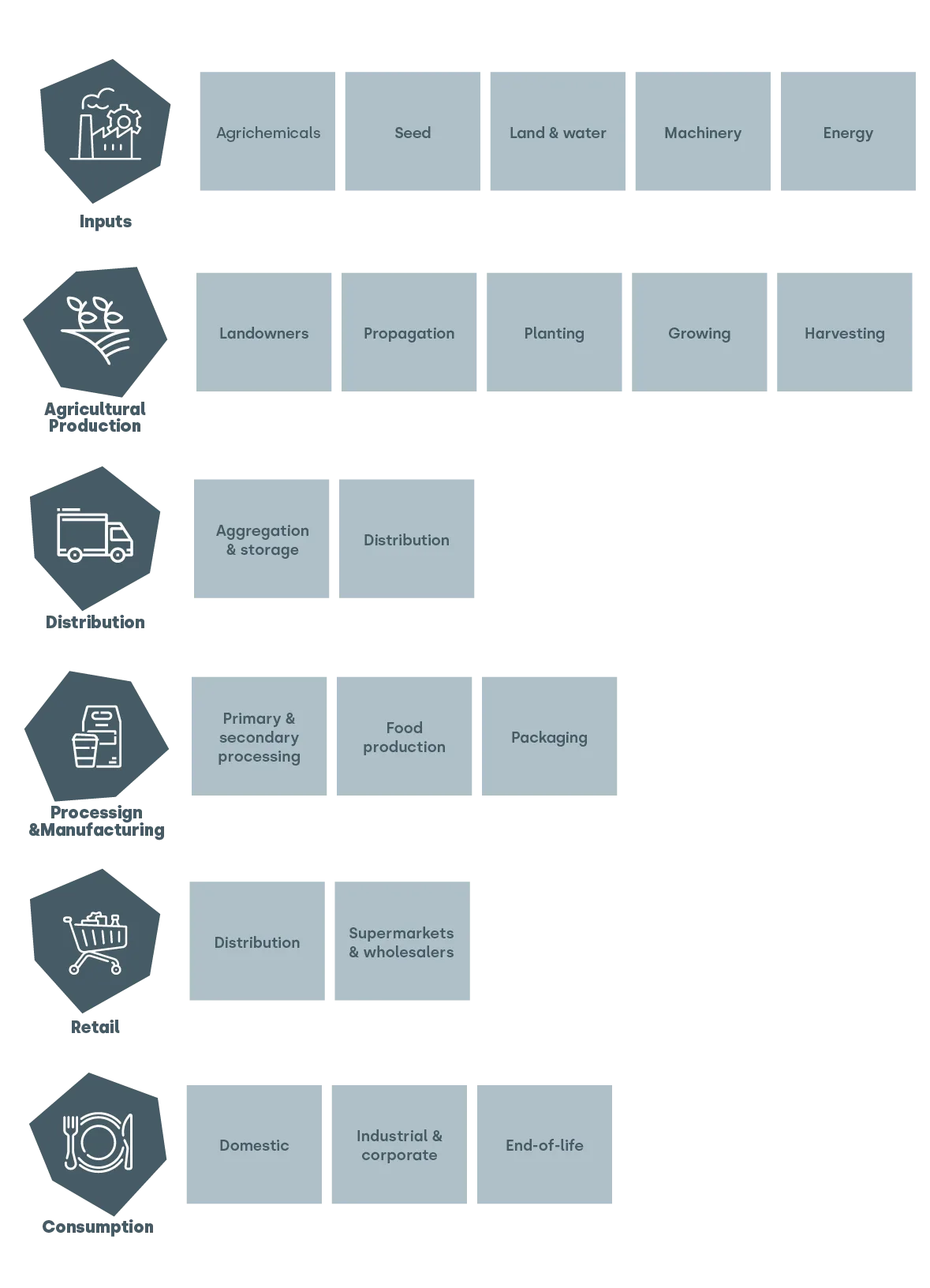
Agri-food system value chain
Illustrated in the value chain diagram below, the agri-food system encompasses all activities related to the inputs, production, processing, distribution, consumption and disposal of food globally. The value chain mapping aligns with TNFD’s Additional Guidance by sector and working group members refine it through their input.
Dependencies, impacts, risks and opportunities
A sector-level overview of dependencies, impacts, risks and opportunities (DIROs) provides a useful foundation for a company-level materiality assessment because it highlights the typical DIROs relevant to companies operating in the same sector.
The DIROs capture how businesses in a sector interact with nature – relying on and impacting ecosystem services – and how these translate into risks and opportunities.
Companies should do a company-level materiality assessment – as recommended by the Natural Capital Protocol, SBTN and TNFD frameworks – to evaluate how the potential sector-level DIROs apply to the specific context of that company. The materiality assessment provides greater visibility into the company’s relationship with nature, enabling it to:
- Identify and manage risks;
- Uncover new business opportunities;
- Respond effectively to evolving investor and regulatory expectations.
This ultimately helps future-proof the business.
Methodologies for company-level materiality assessments include the Taskforce on Nature-related Financial Disclosures Guidance on the identification and assessment of nature-related issues: the LEAP approach and Science Based Targets Network’s Step 1: Assess your impacts on nature. The screening helps prioritize a more granular assessment of your company’s DIROs.
Dependencies and impacts in the agri-food system
A system-level overview of dependencies and impacts provides a useful foundation for a company-level materiality screening. It highlights the typical dependencies and impacts relevant to companies operating in the same sector. Below are the top dependencies and impacts identified for the agri-food system.
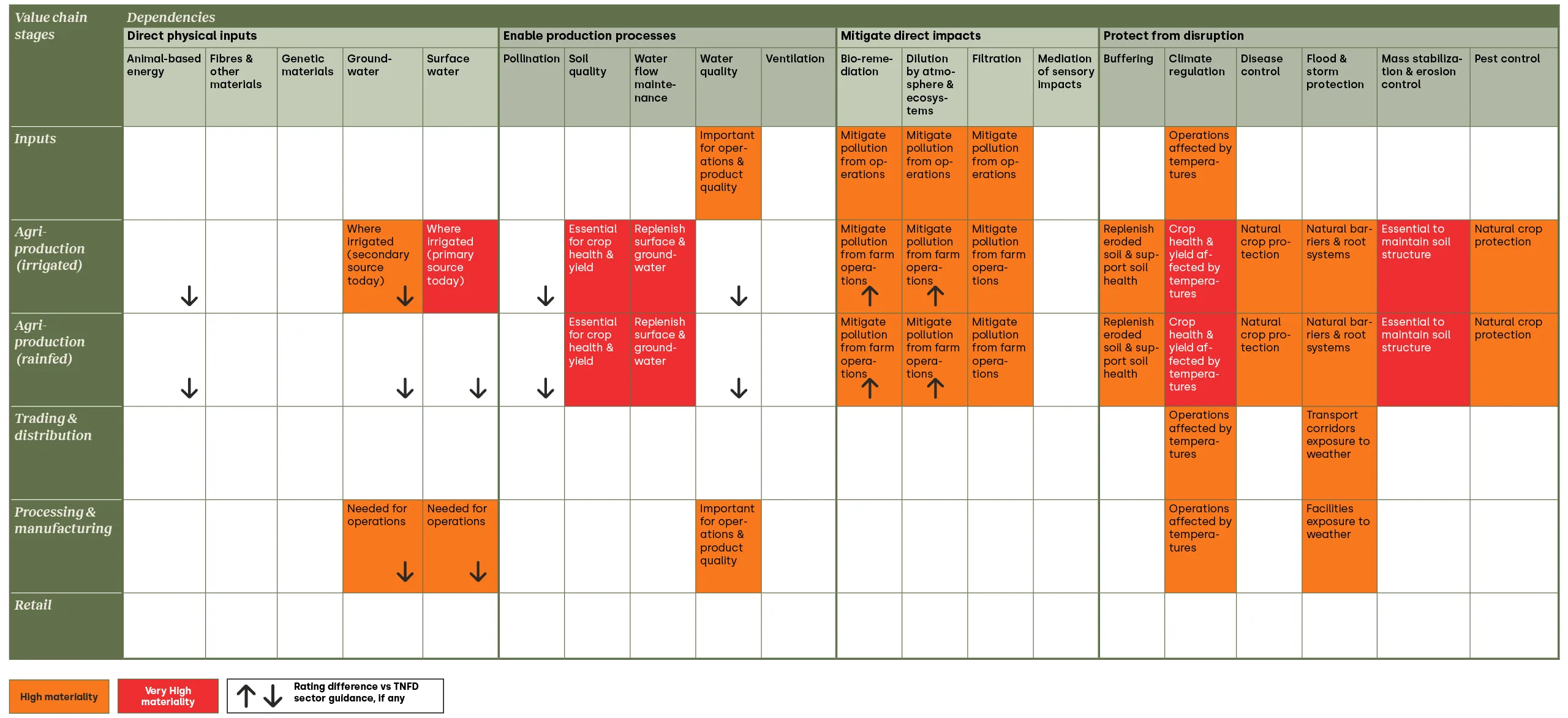
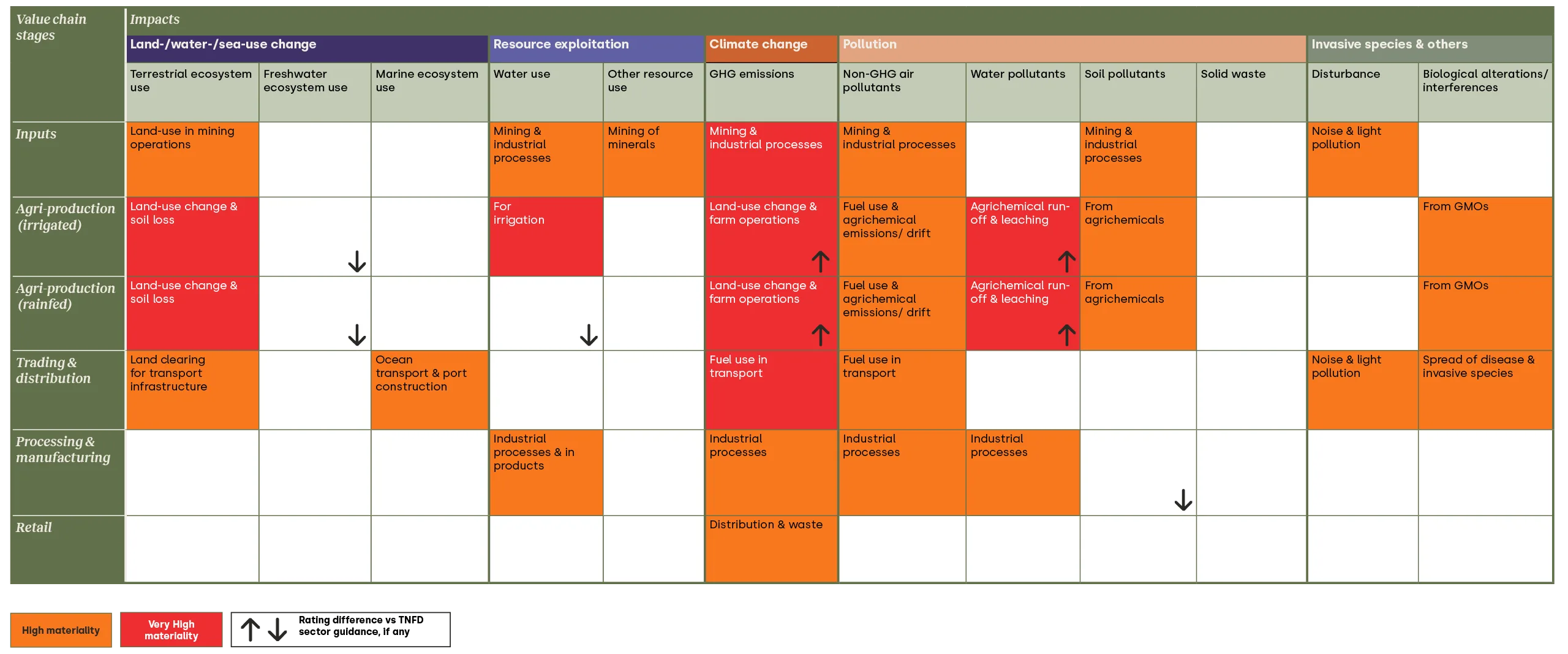
The tables below go into further detail, with the results of a materiality screening aggregated for the agri-food system across the stages of the value chain.
This is a generalized assessment, highlighting only those dependencies and impacts evaluated to have potentially high or very high materiality. The rationale is that these are the most likely to require further risk and opportunity evaluation and to inform the development of nature-related actions and targets.
Arrows indicate our ratings relative to the system-level screening for agricultural products available in the TNFD’s Sector Guidance – Food and Agriculture, meaning the specific differences we note for this subsector of row crop commodities.
The materiality ratings in the tables are based on the 2018–2023 version of the ENCORE (Exploring Natural Capital Opportunities, Risks and Exposure) database.
Risks & opportunities
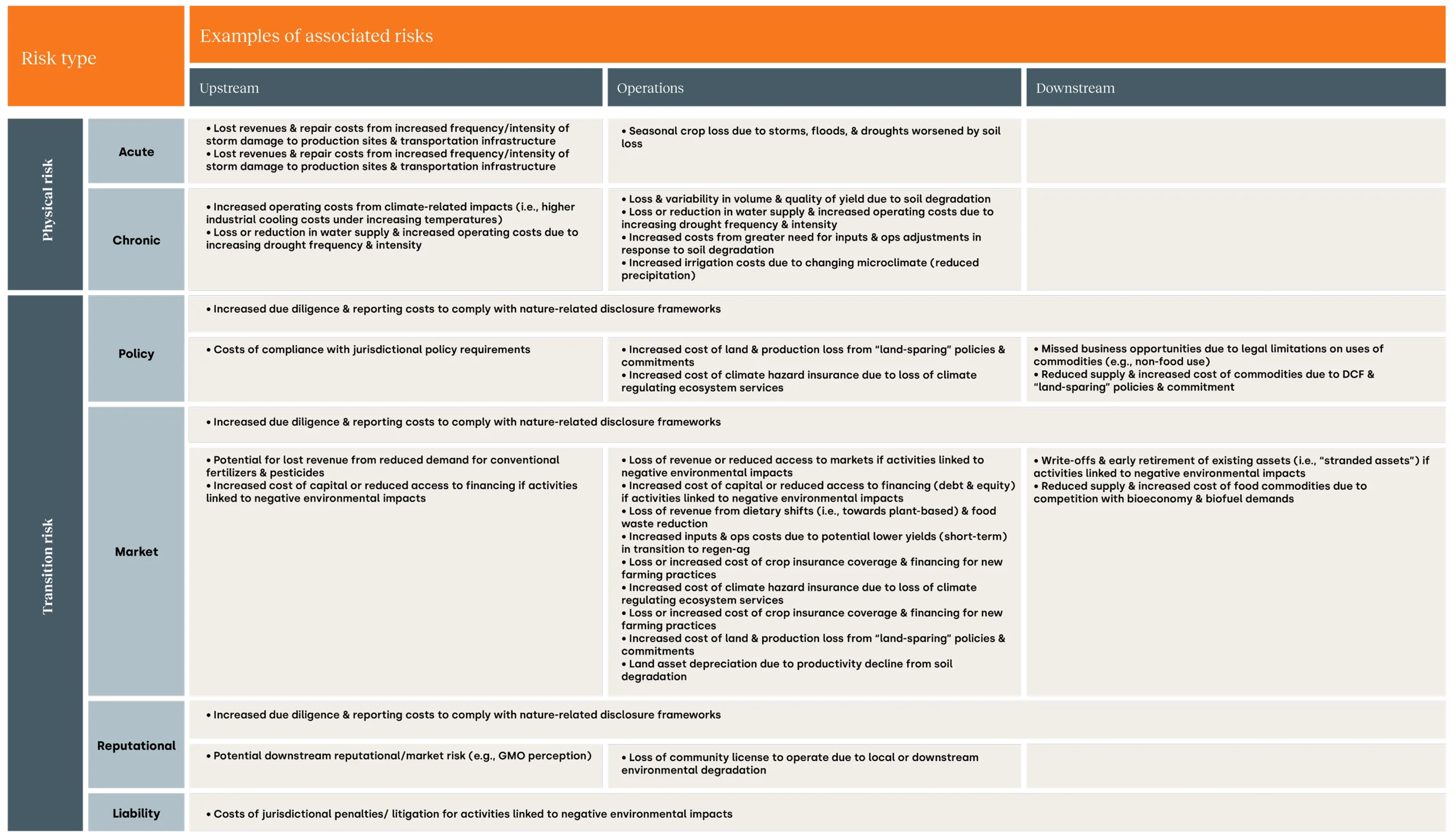
Nature-related risks affect every part of a business – from physical and operational disruptions to transition pressures like new regulations, litigation and reputational risk, and systemic threats as ecosystems start to fail.
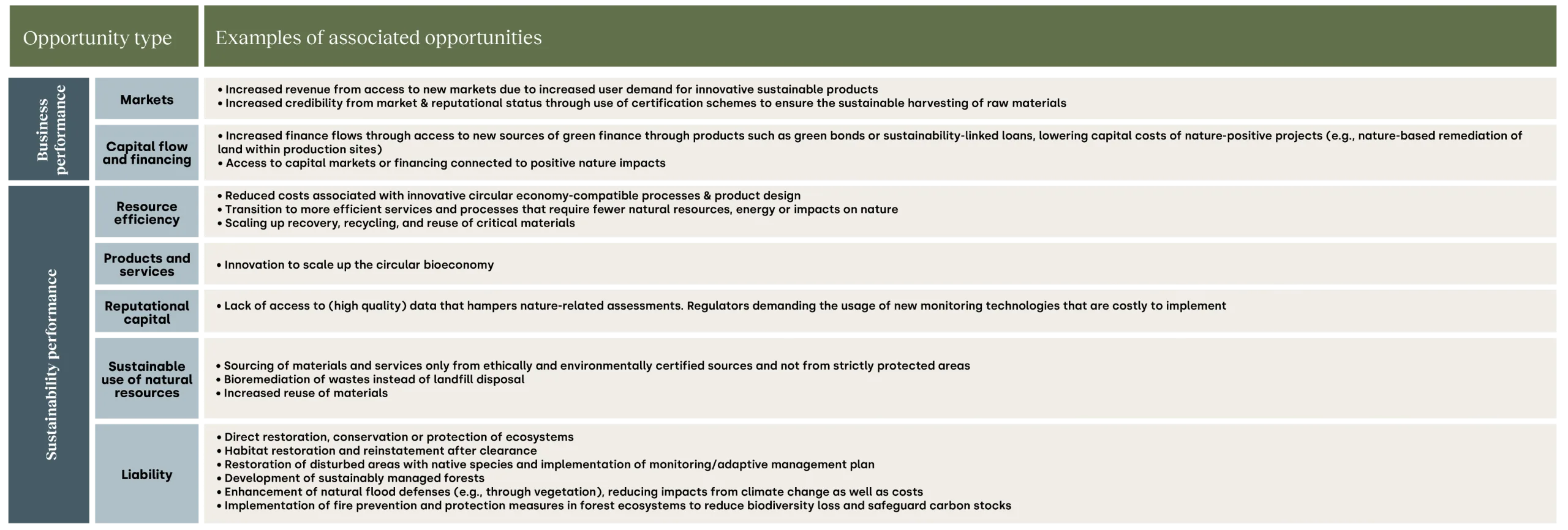
Companies that respond proactively by transforming business models, products, services and investments can leverage those same forces. They can gain a competitive edge, strengthen investor and stakeholder confidence, and build the operational resilience needed to thrive in a changing world.
The table below outlines examples of key risks and opportunities for the agri-food system, based on the TNFD framework.