Natural Climate Solutions for the Voluntary Carbon Market: An Investor Guide (2026 Update)
Published: June 27, 2024
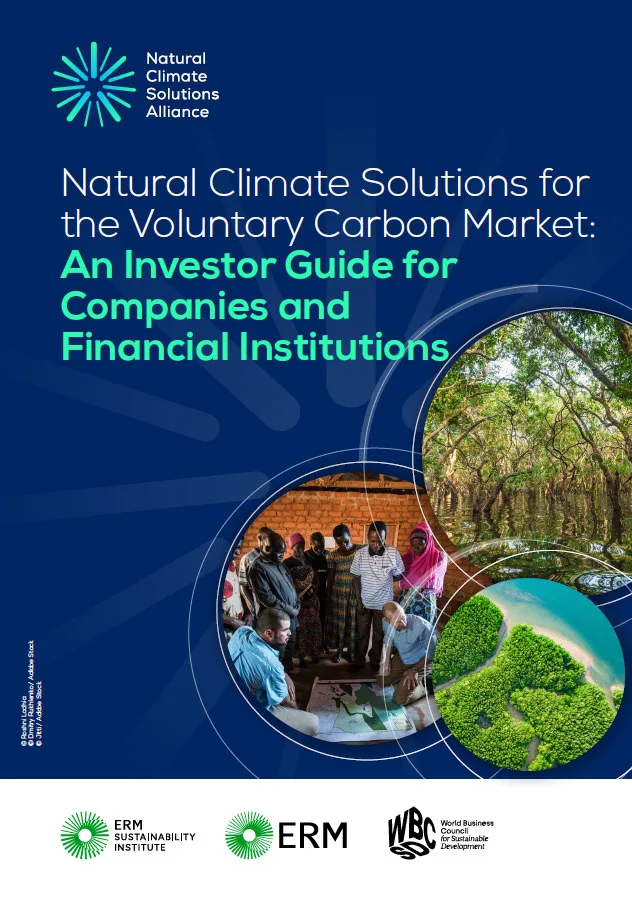
This 2026 update provides practical guidance for companies and financial institutions investing in Natural Climate Solutions (NCS) through the voluntary carbon market. Produced by the Natural Climate Solutions Alliance (NCSA), ERM, and the ERM Sustainability Institute, it reflects a rapidly evolving market, with increased expectations around integrity, transparency, and risk management.
What’s new in 2026
- New dedicated section on risk in NCS investments, including key risk categories and mitigation approaches
- Strengthened guidance on due diligence
- Updates reflecting recent market developments and integrity considerations
Why this guide matters
NCS represents a growing asset class with the potential to deliver climate, nature, and social outcomes alongside financial returns. However, investments are complex and exposed to multiple risks across the project lifecycle. Investors need clear, practical guidance to navigate these challenges and unlock high-integrity opportunities.
How to use this guide
This guide supports investors across the full NCS investment lifecycle – from building a business case to structuring investments, managing risk, and ensuring long-term performance.
It can be used to:
- Understand the investment case for NCS within a broader portfolio
- Structure investments and engage stakeholders effectively
- Identify, assess, and manage risks across the investment lifecycle
- Conduct robust due diligence to ensure high-integrity outcomes
- Design fair and effective investment arrangements, including revenue sharing
- Monitor performance and impact over time
The guide is structured around key stages of the investment process but can be used flexibly depending on your starting point.
Importantly, this 2026 update integrates risk as a core component of investment decision-making, helping investors assess exposure across commercial, operational, regulatory, and reputational dimensions, and apply practical tools to manage these risks effectively.