“Our social, nature and climate teams meet regularly and collaborate, but there is no cross-cutting strategy yet and we do not easily have insight into potential trade-offs and co-benefits between the three agendas. We are keen to learn and co-design how we can better work on the intersections between the agendas to make them more efficient, effective and simple.”
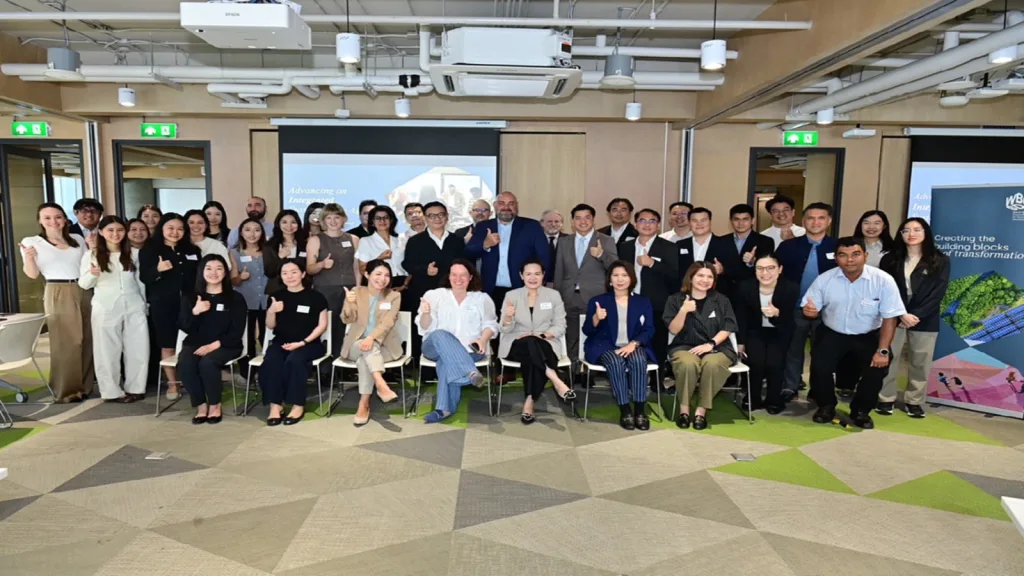
This reflection from one of our members captures well why WBCSD organized a workshop on Advancing an Integrated Sustainability Agenda, held in Bangkok on 24 March. The day was hosted by Charoen Pokphand (C.P.) Group and brought together 40 participants from 26 companies to explore how organizations can better integrate nature, people and climate agendas into holistic sustainability strategies and unlock business value.
What is an integrated sustainability agenda, and why does it matter?
An integrated sustainability agenda takes a holistic approach, connecting climate, nature and social priorities and embedding them into core business functions such as governance, risk, procurement, finance and innovation.
Rather than advancing these agendas in parallel, integration means managing them in an interconnected way across sustainability topics and within business decision-making. This helps companies better manage risk, allocate resources more efficiently, and build long‑term value and resilience.
As sustainability expectations continue to grow, many companies face pressure to deliver multiple priorities at once, often with limited time, resources and clarity. Without stronger integration, this can result in unintended trade‑offs, missed co‑benefits and increased complexity. In response, companies are increasingly looking for practical, integrated approaches that simplify decision‑making, improve return on investment and impact, and support business performance and competitiveness.
The realities of working towards an integrated agenda
For many companies, the real question is not whether integration matters, but how to make it work in practice. Many organizations still operate in silos, with separate teams for climate, nature, and social issues, each with their own targets and incentives. Participants highlighted challenges related to measurement, prioritization and capabilities, while short‑term business pressures can make longer‑term sustainability goals harder to advance.
These challenges are further complicated by real trade‑offs between agendas, where progress in one area can place pressure on another. For example, reducing water use through reuse and recycling can reduce pressure on natural water resources and the communities that depend on them, but at the same time increase energy use and emissions.
The workshop therefore focused on how companies can move from ambition to implementation, integrating climate, nature and social priorities into decision‑making, operations and value chains in ways that reflect their specific context and business model.
Through interactive discussions and hands-on exercises, participants explored practical barriers such as fragmented metrics, competing incentives and capability gaps, and examined how synergies and trade‑offs play out in practice when balancing climate, nature and social objectives.
How companies are making integration work in practice
Various companies are making progress towards more integrated approaches, experimenting with different ways of aligning climate, nature and social priorities across strategy and operations.
This was illustrated during the workshop through C.P. Group’s approach, shared as a practical example. Dr. Teerapon Tanomsakyut, Chief of Sustainability and Strategic Development, Chief of Strategic Intelligence and Communications of C.P. Group, noted that the business environment has changed significantly, with sustainability now becoming a “license to operate” for global companies.
He shared that at C.P. Group, integration is built into the company’s strategy. Its “Heart, Health and Home” framework brings environmental, social and governance priorities together under one direction, supported by strong leadership alignment and collaboration across business units.
Other examples shared during the workshop highlighted how integration can take shape through organizational design and implementation. One participant described moving away from a fully centralized sustainability model, with sustainability expertise embedded more closely into business activities, helping to link climate, nature and social priorities to everyday decisions. Another example showed how a circularity initiative, initially designed as a standalone effort, required coordination across multiple functions to deliver in practice, illustrating how integration can take shape at the operational level, not only through strategy.
Participants also emphasized the need to build capabilities across the organization. Boards, executives and business functions need a stronger understanding beyond climate, while sustainability teams must better link their work to business risks and opportunities, by speaking the ‘language of the business’.
Taken together, discussions during the workshop highlighted how integration can start to take shape in different ways, even as for many companies this remains an ongoing journey towards a fully embedded organizational approach.
Advancing the integrated agenda is a journey
The workshop emphasized that advancing an integrated sustainability agenda is indeed an ongoing journey. By sharing experiences and testing ideas in a practical setting, participants gained deeper insight into how integration can take shape in their own organizations, while recognizing that there is no single model and that progress will look different across contexts.
WBCSD is supporting its members on this journey by providing insights, practical perspectives, and opportunities for action. The Bangkok workshop forms part of a broader set of activities, with further in-person and virtual engagements planned to build capabilities and share best practices across regions.
If you are keen to get involved and stay informed on upcoming workshops, please don’t hesitate to get in touch with Iris van der Velden at vandervelden@wbcsd.org. The next in-person learning day will take place on 29 October at the Laudato Si Center for Higher Education, continuing the focus on advancing integrated sustainability agendas in different contexts.
The workshop was also covered by The Nation Thailand, which can be read here. Highlights from the session, shared by C.P. Group, are available to watch here.
Outline
Related
Content
Uniting Global Stakeholders to Advance Green Supply Chain Transformation at Shanghai Climate Week
28 April, 2026
“From morality to materiality” – Highlights from London Climate Action Week 2025
3 July, 2025
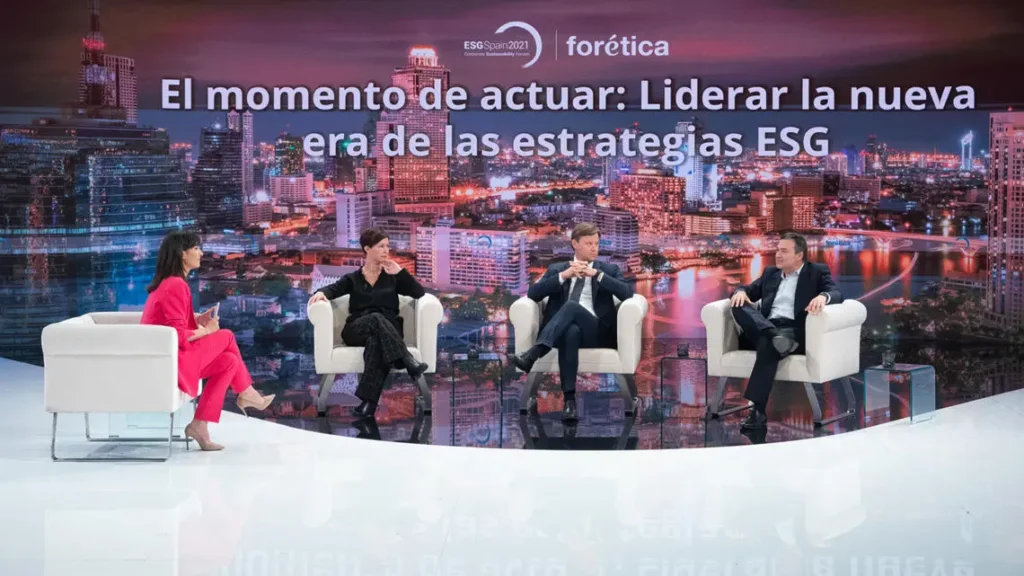
‘ESG Spain 2021 – Corporate Sustainability Forum’ by Forética presents the keys to accelerate business transformation that fosters a sustainable, green and inclusive recovery
1 October, 2021