Natural Climate Solution Carbon Credits: The Role of Jurisdictional REDD+ Programs
Published: April 29, 2026
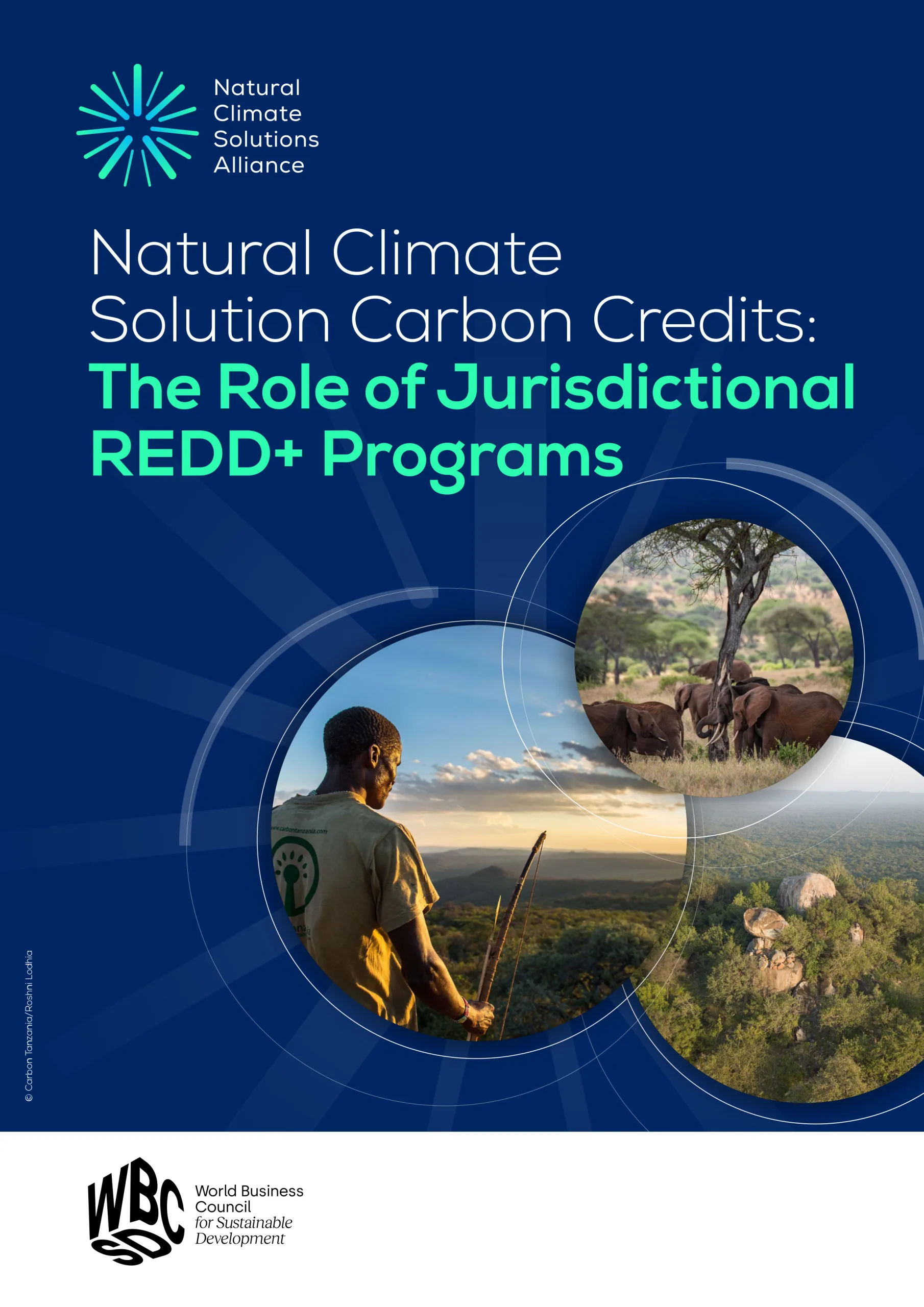
Jurisdictional REDD+ (JREDD+) programs are emerging as one of the most important mechanisms to address deforestation at scale while delivering high-integrity carbon credits. Operating at national or subnational levels, these programs tackle the systemic drivers of forest loss and channel finance to where it is most needed – supporting governments, Indigenous Peoples, and local communities in protecting critical ecosystems.
This guide, developed by the Natural Climate Solutions Alliance (NCSA), provides a practical overview of how JREDD+ programs are designed, implemented, and brought to market. It outlines the full lifecycle of a program – from planning and stakeholder engagement through to monitoring, verification, credit issuance, and the mobilization of finance.
It also highlights how jurisdictional approaches complement project-level REDD+, and how nested systems can combine large-scale policy action with on-the-ground implementation to maximize impact.
For the private sector, the guide explores key pathways to engage with JREDD+ programs, including up-front financing, forward purchase agreements, and spot purchases of credits. It also examines the strategic value of these programs in supporting corporate climate and nature strategies – particularly through their ability to deliver emissions reductions alongside biodiversity, water, and social benefits at scale.
Who should read this guide?
- Companies exploring investment in jurisdictional REDD+ programs
- Sustainability and climate strategy leads
- Carbon market participants looking to understand JREDD+ credit origination
- Policymakers and practitioners working on forest protection and climate finance
By providing clarity on how high-integrity JREDD+ credits are generated and how companies can engage, this guide aims to support increased confidence, transparency, and investment in one of the most critical solutions for tackling deforestation and climate change.