This impact story is part of a series featuring companies that are members of One Planet Business for Biodiversity (OP2B)/WBCSD. Through these stories, we aim to showcase our members’ commitment to driving the transition to regenerative agricultural practices, the impact on farmers, and the role OP2B plays in supporting this transformation.
Farm resilience as a business’ strategic necessity
McCain Foods is a Canadian family-owned company and one of the world’s largest manufacturers of prepared potato products. Its business begins on the farm and depends on the long-term resilience of that farm network. With more than 4,400 grower partners across six continents, this makes farm performance a direct driver of commercial performance.
Potato farming is climate-sensitive and over the past decade droughts, floods, and heat stress have reduced yields by around 10%, while rising input costs have further compressed margins. The case for structural change is clear. “Agriculture is the foundation of our business,” says Charlie Angelakos, Vice President, Global External Affairs and Sustainability, McCain Foods. “Farm resilience is not a sustainability aspiration: it is a strategic necessity.”

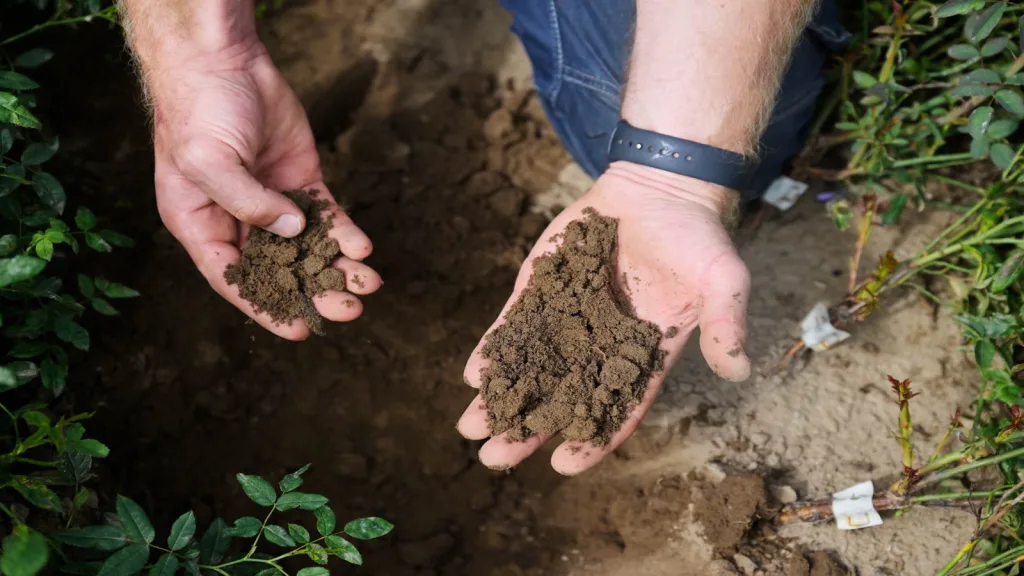
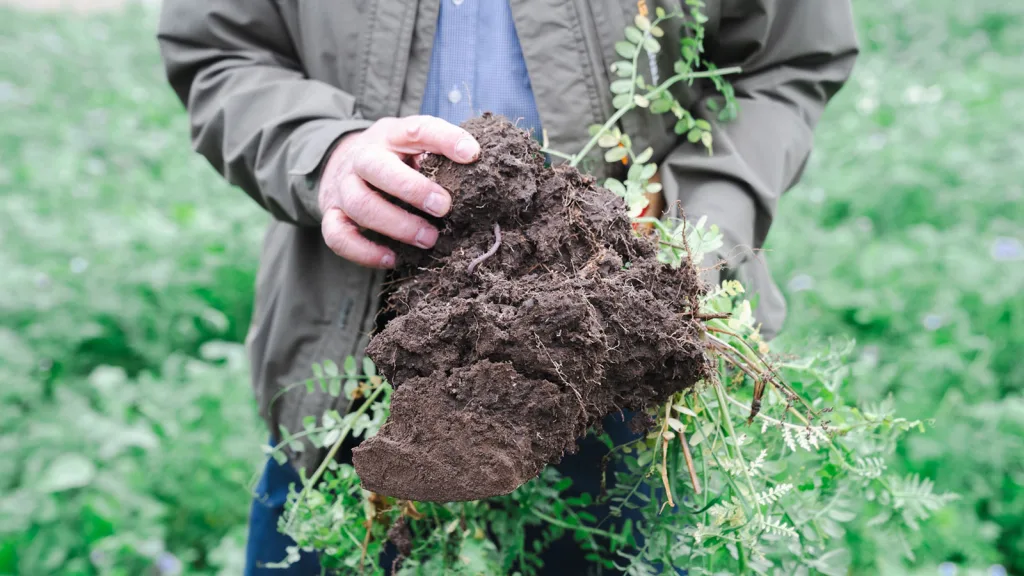
In response, McCain has committed to transition 100% of its global potato acreage to regenerative practices by 2030. First announced in 2021, the target has been translated into action: in 2025, 69% of acreage reached the onboarding level of the McCain Regenerative Agriculture Framework, developed in partnership with scientists and civil society partners to measure agronomic, environmental, and economic dimensions.
To accelerate adoption, McCain operates three Farms of the Future in Canada, South Africa, and Great Britain. These sites test reduced tillage, cover crops, diversified rotations, and optimized inputs under commercial conditions, with results shared directly with growers through field trials and an advisory network.
Early outcomes are promising. Across demo farms and innovation hubs, regenerative practices have demonstrated promising agronomic outcomes, including yield improvements in several pilot locations.
How transition is built at scale
Active across Europe, North America, South America, India, China, South Africa, Australia and New Zealand, McCain’s Regenerative Agriculture programmes follow a consistent model. They are multi-year partnerships (typically 3-5 years), combining agronomic advisory, field diagnostics, and tools to monitor soil health, water, and biodiversity. They also include financial de-risking through preferential loans, multi-year purchase contracts, and co-funded grants. Increasingly, they operate at landscape level rather than farm by farm, aligning incentives across the value chain and creating scale.
Scaling regenerative agriculture requires more than individual farm-level ambition. It needs a coherent architecture: long-term partnerships, shared measurement systems, and financing models that distribute the cost of transition across all actors with a stake in the outcome. McCain is implementing this approach across its global sourcing footprint.
At the center of this approach are two flagship landscape-level initiatives that illustrate collective transition in practice.
France: aligning the landscape through COVALO
France is McCain’s largest sourcing country in Europe. The company works directly with 800 potato growers and operates three processing facilities in the Northern part of the country, making the resilience of French potato supply a central strategic priority. To accelerate change at scale, McCain joined COVALO, a regional coalition led by Pour une Agriculture du Vivant, bringing together upstream and downstream actors across northern France. COVALO is particularly innovative in the way it brings together public and private actors in territorial coalitions to jointly finance the transition and enabling shared investment across stakeholders.
The logic behind COVALO is straightforward: farmers don’t operate within a single supply chain. The same fields sit in rotations that serve multiple crops and multiple buyers, each with their own requirements. The fragmentation makes transition harder than any single company can solve alone. COVALO addresses this by shifting the scale of coordination from contracts to landscapes.
”COVALO brings everyone with a stake in our farmers’ success around one framework,” says Charles Dezitter, Sustainability Director Europe at McCain Foods. “That is what makes the transition viable at scale.”

Instead of multiplying standards, COVALO creates a shared reference point through the Regeneration Index, allowing farmers to be assessed once across their rotation, regardless of how many buyers they supply. This reduces duplication and changes the dynamic from parallel compliance demands to a single view of progress over time. Around this shared measurement, companies, cooperatives, banks, and public actors can also begin aligning financing and risk at landscape level, rather than working in isolation. For farmers, this translates into a more coherent transition pathway, with fewer overlapping requirements and more consistent access to premiums, ecosystem payments, and preferential financing.
United Kingdom: coordinating the landscape through Routes to Regen
In the United Kingdom, McCain participates in Routes to Regen, a collaborative landscape program in the East of England developed with the Royal Countryside Fund and Ceres Rural. The Royal Countryside Fund brings expertise in rural resilience and farmer engagement, while Ceres Rural provides specialist agronomic and land management advice. Together, they provide potato growers a structured pathway for transition, combining technical guidance with tailored financial and commercial support within a single coordinated and easy-to-access framework for individual farmers.
The transition to regenerative agriculture brings operational change before benefits fully materialize. Landscape-level programs help us manage that risk and align incentives across the supply chain.
– Charles Dezitter, Sustainability Director Europe at McCain Foods.
Together, COVALO and Routes to Regen illustrate McCain’s broader shift in sourcing strategy: from bilateral, farm-by-farm engagement toward collective, landscape-level models where the costs and benefits of transition are shared across all actors involved.
Scaling transition through multistakeholder collaboration
Regenerative agriculture cannot be scaled alone. It requires farmers, researchers, and companies to share knowledge, practices, and data to achieve meaningful impact. McCain’s participation in OP2B reflects this belief, providing a platform to exchange insights and learn from peers working on similar transitions across global supply chains.
Regenerative agriculture is, by its nature, a collaborative endeavor. OP2B helps us turn shared challenges into shared solutions at scale.
– Charlie Angelakos, Vice President, Global External Affairs and Sustainability, McCain Foods.
OP2B contributed to the policy debate at the European Union level, supporting efforts in the recognition of regenerative agriculture practices. By engaging with policymakers and value chain stakeholders, the coalition is building a shared understanding of what regenerative agriculture means in practice. In coordination with initiatives such as the SAI Platform, these efforts support more consistent measurement and implementation approaches across value chains.
“Platforms like OP2B give us a space to share not only what works well but also the challenges we encounter on our regenerative agriculture journey,” says Charlie Angelakos, Vice President, Global External Affairs and Sustainability, McCain Foods. “By combining our experience with that of industry peers, we can address how to scale regenerative practices across farms and regions in a way that delivers practical, measurable progress for the entire industry.”
Regenerative agriculture is a critical solution to transform the way we produce food, feed and fiber, benefiting the climate, nature, and people. Over the next years, the OP2B coalition will focus on unlocking three strategic levers to scale implementation of regenerative agriculture: harmonizing measurement, fostering collaborations to support farmers’ transitions, and advocating for supportive policies to create an enabling environment.
Outline