This impact story is part of a series featuring companies that are members of One Planet Business for Biodiversity (OP2B)/WBCSD. Through these stories, we aim to showcase our members’ commitment to driving the transition to regenerative agricultural practices, the impact on farmers, and the role OP2B plays in supporting this transformation.
Building regenerative agriculture into the barley supply chain
Barley is the backbone of the world’s most consumed beverages. While barley is relatively resilient among cereals, malting barley supply chains are increasingly exposed to heat, drought and water variability, with consequences for yield stability, grain quality and malting performance. For Boortmalt, a world-leading malting company with 25 malting plants across five continents, that vulnerability has sparked a decisive shift: regenerative agriculture is no longer a side project, it’s the future of barley sourcing.
Regenerative agriculture holds many long-term virtues for the planet. Yet it will only be adopted at scale if it also improves growers’ economics. In today’s environment, asking consumers to bear additional costs is unrealistic. Success depends on proving that regenerative systems ultimately lower production costs on farms. This is what we are trying to support
– Yvan Schaepman, Chief Executive Officer of Boortmalt
Headquartered in Antwerp, Boortmalt sits at a uniquely powerful point in the global malt supply chain – sourcing from farmers worldwide and supplying brewers, distillers and food manufacturers. It has an important role to play in supporting farm-level emissions reductions and the leverage to drive change, now backed by quantified climate targets validated under the Science Based Targets initiative’s FLAG (Forest, Land and Agriculture) framework. Boortmalt has committed to cutting Scope 3 (indirect) FLAG emissions by 30% by 2030 and is progressively bringing its barley farms into regenerative practices.
Addressing agricultural emissions isn’t just a climate imperative, it’s a resilience imperative. The barley supply chain faces growing weather volatility, drought and shifting conditions. The shift away from conventional practices is the only credible response.
– Lynette Chung, Chief Sustainability Officer

Etienne Allard, a barley farmer in Petit-Enghien, Belgium, taking part in Boortmalt’s Pure Local Programme, shares that view: “The real risk is to not do the transition. Conventional agriculture has reached its limits and no longer offers a viable path forward. Regenerative practices represent the future.”
Building on this dual role – sourcing from farmers and supplying some of the world’s biggest brewers and distillers – Boortmalt is uniquely placed to reshape how barley is grown in practice, from field to malt. At the heart of this sits one unifying conviction: healthy soil is the foundation of everything.
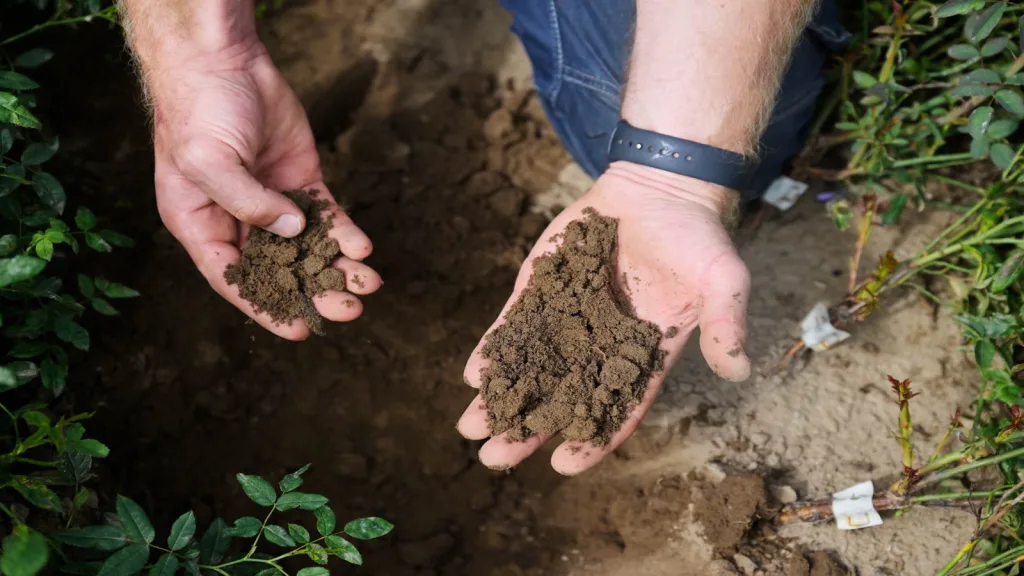
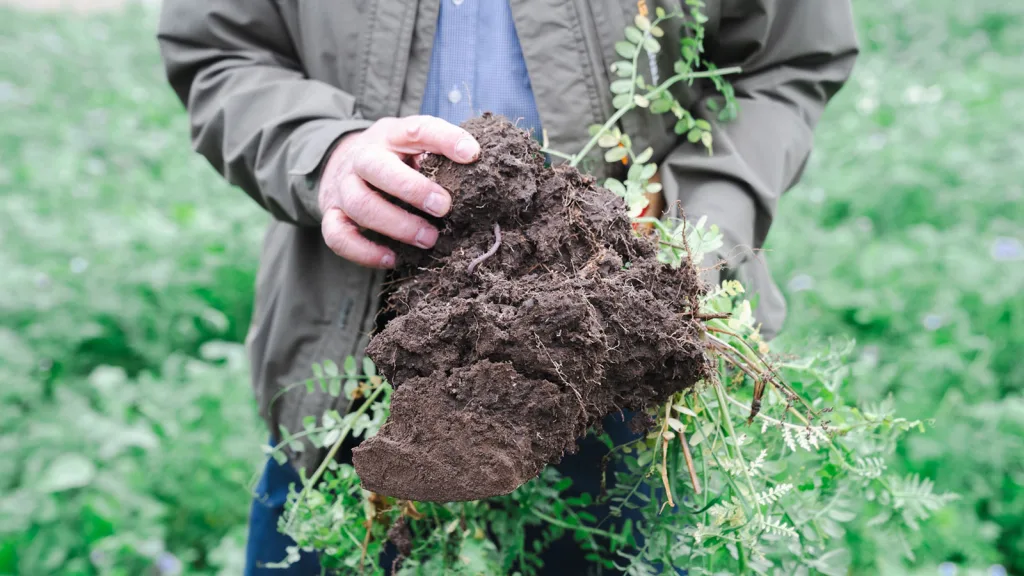
Soil health is what drives resilience, biodiversity, water and nutrient management. That is the pillar of any regenerative programme.
– Gauthier Boels, Global Sustainable Agriculture Manager
From pilot projects to scalable models
Boortmalt’s regenerative programmes don’t follow a single blueprint. Across Europe, Canada, Argentina and Australia, each approach is shaped by local farming conditions, supply chains and existing initiatives. Last season alone, 90,000–95,000 tonnes of barley were grown under regenerative practices across Boortmalt’s sourcing regions, with volumes set to grow again this year, according to the company’s 2025 Sustainability Report.
Three programmes tell the story of how a global ambition becomes local reality: a direct farmer engagement model in Ireland, a cooperative-based approach in France, and a low-carbon fertiliser initiative in Argentina. Together, they reveal Boortmalt’s broader strategic logic, combining direct farmer relationships, supplier programmes and value chain collaboration to drive adoption at scale.
Ireland: a whole farm transition model
In Ireland, Boortmalt is one of the main buyers of malting barley. There the company partnered with Soil Capital to build a regenerative agriculture programme designed to scale from day one. Covering around 5,000 hectares, the Boortmalt Ireland Regen Ag Program takes a whole-farm approach, integrating regenerative practices across crop rotations rather than focusing on barley alone. This approach strengthens agronomic coherence, improves risk management and opens the door for future multi off-taker landscape initiatives, in which other crop buyers could join the same regenerative framework.
In its first harvest year, participating farmers produced around 12,000 tonnes of regenerative malting barley, with volumes expected to grow significantly as the rotation-based model matures. Rather than relying on high premiums, the programme focuses on improving farm economics through better soil health and input efficiency plus lower costs for fuel, fertiliser and crop protection.
Regenerative agriculture will only scale if it works economically for farmers. We moved away from models that depend on high premiums and focused instead on building a robust business case with clear technical support and long-term risk management for growers.
– Gauthier Boels, Global Sustainable Agriculture Manager
France: scaling through cooperative partners
In France, Boortmalt works with Axereal, one of the leading grain cooperatives in Europe, through the CultivUp Regeneratif programme, building on an established network of more than 2300 farmers, including approximately 1200 barley growers, producing crops under regenerative agriculture practices across more than 200,000 hectares. Boortmalt’s demand provides a stable signal that helps scale regenerative practices across the cooperative’s supply base.
The model shows how regenerative agriculture can expand at scale by aligning agronomic standards, data collection and outcome expectations across cooperatives, malting companies and end customers. With defined metrics on soil health, inputs and emissions, and supported by certification and third-party verification, the programme demonstrates the potential for several hundred thousand tonnes of barley to be grown under regenerative practices.
Argentina: low carbon fertiliser delivering for farmers and the climate
In Argentina, many barley farmers already practice some regenerative practices, such as no-till, so the programme focuses on reducing fertilizer-related emissions through nutrient use efficiency and low-carbon fertilizer solutions, developed in collaboration with partners such as Yara. For the 2025 harvest, Boortmalt’s internal monitoring shows a reduction of around 30% in fertiliser-related emissions and cost savings of about 20 dollars per hectare at farm level – returns built on better nitrogen use, input efficiency and targeted farmer support, not on carbon credits or premium dependency.
The approach reflects a conviction that runs through all of Boortmalt’s regional programmes: “Regenerative agriculture creates shared value across the value chain and that means shared responsibility,” says Boels. “No single actor can deliver this transition alone.”
Partnering with OP2B to align measurement and scale impact
Boortmalt’s membership in OP2B reflects a simple belief: the transition to regenerative agriculture cannot be achieved in isolation. Scale, measurement and farm economics are challenges no single company can solve alone.
Through OP2B, Boortmalt contributes field-level experience and draws on insights from companies navigating similar transitions across different crops and geographies, including how to design landscape-scale initiatives that are affordable for farmers, credible for customers and scalable beyond individual sourcing relationships. “The discussions around collaborative scale-up models and the practical challenges of scaling regenerative agricultures have given useful insights for different players, including ourselves,” says Chung.
OP2B’s recently published Regeneration Map adds another dimension, revealing where members operate in the same sourcing regions and where coordination could unlock additional impact. “The mapping helps us see who is doing what, how we can scale up together, and whether we can build a real transition model for a particular area,” says Chung.
When we talk about creating large-scale change in regenerative agriculture, we need several players moving together. OP2B is the right forum to identify those opportunities and to move from conversation to action.
– Lynette Chung, Chief Sustainability Officer of Boortmalt
Regenerative agriculture is a critical solution to transform the way we produce food, feed and fiber, benefiting the climate, nature, and people. Over the next years, the OP2B coalition will focus on unlocking three strategic levers to scale implementation of regenerative agriculture: harmonizing measurement, fostering collaborations to support farmers’ transitions, and advocating for supportive policies to create an enabling environment.
Outline
Related
Content
Rabobank: Regenerative agriculture as a response to financial risk and driver of supply chain value
4 May, 2026
Carlsberg: Brewing change with regenerative barley
28 November, 2025

L’Oréal: merging beauty and regenerative agriculture for a greener tomorrow
2 October, 2025