This impact story is part of a series featuring companies that are members of One Planet Business for Biodiversity (OP2B)/WBCSD. Through these stories, we aim to showcase our members’ commitment to driving the transition to regenerative agricultural practices, the impact on farmers, and the role OP2B plays in supporting this transformation.
As a cooperative bank, and one of the largest agricultural lenders globally, Rabobank is financing around 75 percent of the country’s farmers in the Netherlands. As such, Rabobank sits at the centre of the agrifood system and wants to facilitate the transition to become future-proof together with key value chain actors. For the bank, regenerative agriculture is not a standalone sustainability ambition, but part of a broader approach to supporting supply‑chain resilience and long‑term value creation.
“We have made a broad set of commitments on climate and nature, including the Paris Agreement and the Kunming‑Montreal Global Biodiversity Framework” says Nicoline van Gerrevink, Head of Food System Transition. “For us as an agricultural bank, regenerative agriculture is one of the mechanisms through which we seek to support delivery against those commitments together with other stakeholders.”

Naturally, climate and nature risks are increasingly material to financial performance. Extreme weather events lead to droughts, flooding, and soil degradation and could affect farm productivity and disrupt supply chains. This increases volatility across the portfolio. The cost of inaction is rising, with transition and climate risks representing increasing financial risks for both clients and the bank itself. So, beyond mitigation, the transition is also about resilience: climate adaptation is as important as emissions reduction, requiring agricultural systems to adjust to changing conditions as much as to decarbonize. Given its position in the sector, Rabobank aims to use its role as a lender to co-facilitate farmers’ transition to more sustainable practices. A key feature of its approach is the alignment of incentives, linking financial and commercial signals to support change at farm level. Among other tools, the bank offers interest rate reductions on eligible loans, while processors provide price premiums and longer‑term contracts, with the aim to enable the co-creation of a coherent economic framework for the transition.
“This is a multi-year commitment, typically three to five years, which provides both stability and accountability”, says Gea Bakker-Smit, Sector Manager Food and Agri.

From strategy to farms: linking environmental outcomes to lending conditions
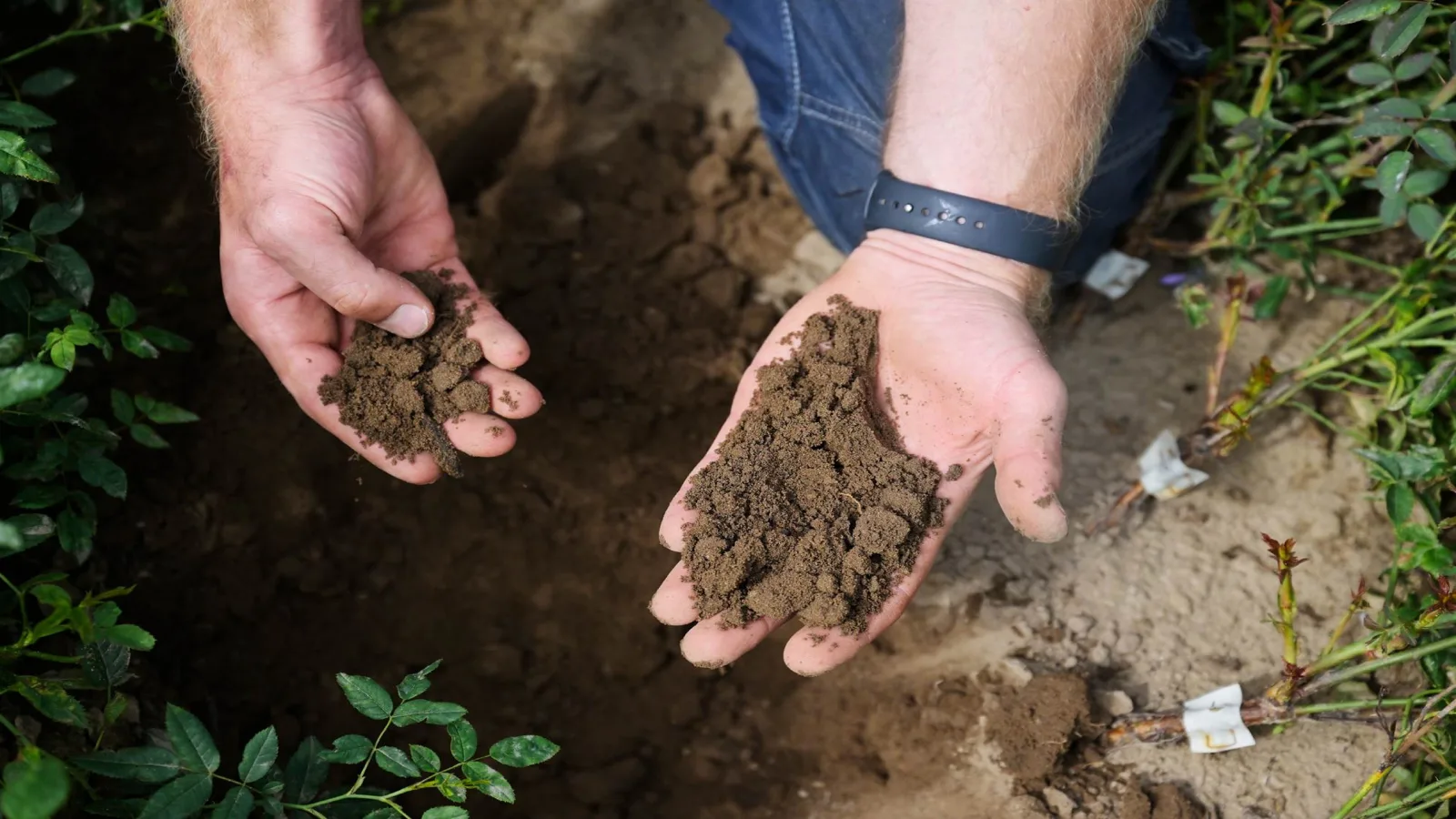
Rabobank links environmental performance directly to lending conditions through structured assessment frameworks. In the Netherlands, the Biodiversity Monitor developed with FrieslandCampina, Wageningen University, sector organizations and WWF Netherlands aims to translate farm practices into measurable indicators based on KPIs covering soil, nutrients and biodiversity.
All those KPIs should be measured, and we use the outcomes to rank farmers. That ranking determines part of the financing conditions, including which clients qualify for more favorable interest rates.
-Gea Bakker-Smit, Sector Manager Food and Agri
A concise set of KPIs on soil, nutrients, crop choices, and nature and landscape elements captures soil health, nutrient management, and biodiversity outcomes, providing the basis for Rabobank’s internal classification of farms. Rabobank distinguishes between enabling and rewarding the transition. In the Netherlands, a dedicated €3bn transition fund supports farmers investing in defined transition pathways, offering higher interest rate discounts and more favorable terms for those who present a credible transition plan. Transition pathways involve extensification, innovation (precision agriculture, energy transition f.e.), and other sustainability investments. In parallel, interest rate reductions across the broader loan portfolio reward top-performing farmers, reinforcing the long-term business case for frontrunners. Rabobank also works together with the European Investment Bank to offer lower pricing on leasing eligible equipment and next to this also offers partly cashbacks to SME clients for investments in energy transition.
Adoption ultimately depends on farm-level economics: even with robust metrics and incentives, farmers can only change practices if the economic case is clear
-Gea Bakker-Smit, Sector Manager Food and Agri
In Rabobank’s dairy value chain, this approach is already embedded, with around 14,000 farmers in the Netherlands contributing data through the Kringloopwijzer system underpinning the Biodiversity Monitor.
What matters is that the farmer sees the benefit of certain KPIs himself; the sustainability dashboard is a good example of this. Sustainability and farmer entrepreneurship then go hand in hand.
-Richard de Bie, farmer participating in Kringloopwijzer system
This framework is now being connected to international frameworks through the Future Fit Dairy initiative, which brings together cooperatives including FrieslandCampina, Arla, Danone and others, and aims to apply these principles, adapted to local conditions and data availability, across around 1,000 farms in 9 European countries. In arable farming, the same logic is being rolled out but data collection remains more manual and fragmented, relying on on-farm assessments by external advisors. Rabobank and its partners are working towards shared data infrastructure across the value chain so that soil, regulatory, and advisory data can be connected and used consistently by farmers and lenders.
Aligning farmers, finance and value chains in the Dutch potato sector
Rabobank’s partnerships in the Dutch potato sector show how performance-based finance can be operationalized in practice. Working with processors such as McCain, Aviko, and Farm Frites, the bank currently supports around 300 farmers, with the ambition to expand the program over time. The approach is highly localized, reflecting the variability of agricultural systems. “We start from the specific conditions of each farm (soil, environment and cropping system) and define what transition pathways are realistic in that context” says Gea Bakker-Smit, Sector Manager Food and Agri. Farmers receive agronomic advice, soil analysis, and participate in peer learning groups, embedding the transition in day-to-day farm management. Participation is conditional on clear commitments. Farmers follow a multi-year transition plan and demonstrate continuous progress towards more sustainable practices, moving step by step from beginner to more advanced levels of performance, with financial and commercial incentives linked to documented improvements over several years. A key feature is the alignment of incentives across the value chain. This multi-year commitment helps de-risk the transition for farmers and underpins a more resilient business model. Peer dynamics then accelerate adoption, as farmers learn from each other’s results and see that lower inputs can be compatible with stable yields and quality.
We are a group of creative and practical farmers who learn from each other.
-Ludwig Mulders, farmer and participant in Farm Frites’ Future Farming Program
Rabobank and OP2B: where collaboration drives transition
Rabobank joined OP2B to engage more directly in an action-oriented platform focused on agriculture, where most of the transition takes place. For the bank, OP2B’s value lies in its ability to bring together major food companies and coordinate action across actors that would otherwise operate in isolation.
It gives us a place to align approaches, share experiences and work on shared, outcome-based metrics for regenerative agriculture
-Nicoline van Gerrevink, Head of Food System Transition
Rabobank sees its contribution within OP2B as combining finance, knowledge, and networks: deploying finance where it genuinely enables transition, sharing sector insights from its position between farmers, companies and researchers, and connecting actors who do not usually sit around the same table.
Regenerative agriculture is a critical solution to transform the way we produce food, feed and fiber, benefiting the climate, nature, and people. Over the next years, the OP2B coalition will focus on unlocking three strategic levers to scale implementation of regenerative agriculture: harmonizing measurement, fostering collaborations to support farmers’ transitions, and advocating for supportive policies to create an enabling environment.
Outline
Related
Content
Carlsberg: Brewing change with regenerative barley
28 November, 2025

L’Oréal: merging beauty and regenerative agriculture for a greener tomorrow
2 October, 2025

From wheat fields to global scale: how Griffith Foods is pioneering regenerative agriculture
29 September, 2025