Explore: understand your DIROs

Understand impacts, dependencies, risks, opportunities

Energy Sector

The energy system has broad and significant impacts and dependencies on nature, especially through its large-scale use of land and water and its large contribution to greenhouse gas (GHG) emissions 

While this presents risks to business continuity and company value, the energy system equally has great potential to drive nature-positive change in its value chain and beyond, as domestic households and almost all business activities use energy.  

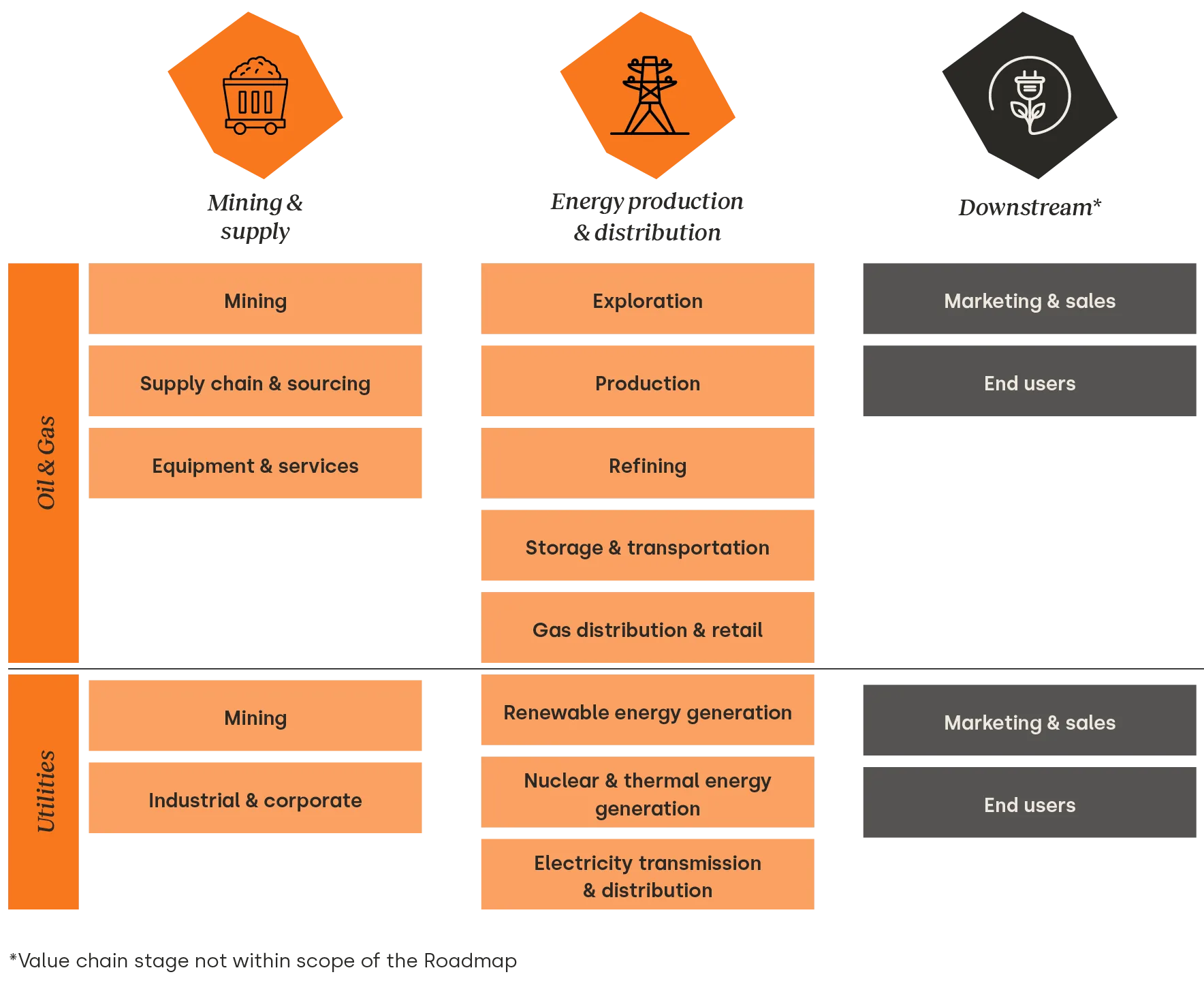
Energy system value chain

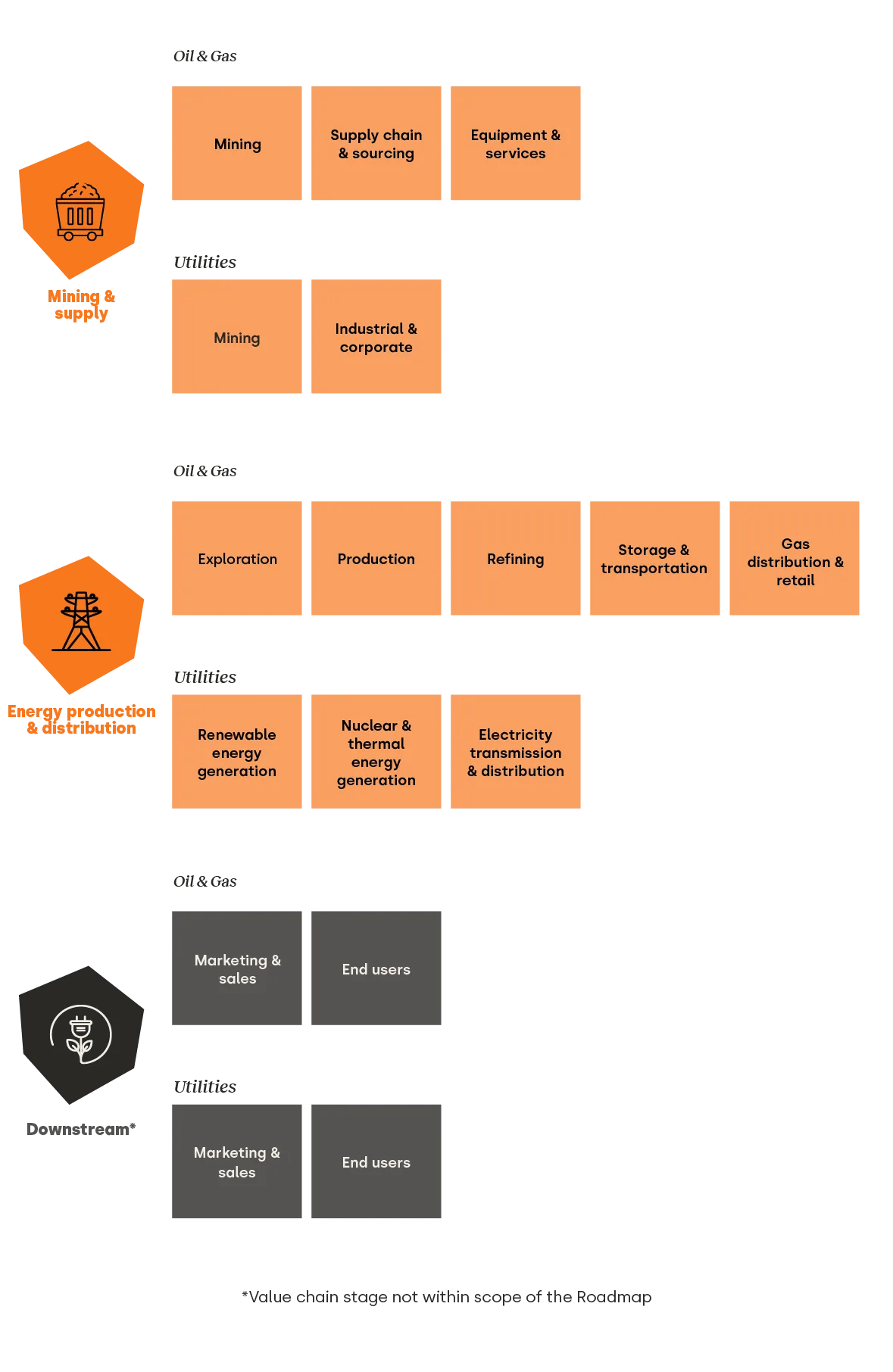
The energy system includes everything involved in the production, conversion, storage, delivery and use of energy. Here we cover direct operations and the supply chain of two sectors – oil and gas, and utilities.  

The value chain mapping aligns with TNFD’s Additional Guidance by sector and working group members refine it through their input. 

Dependencies, impacts, risks and opportunities

A sector-level overview of dependencies, impacts, risks and opportunities (DIROs) provides a useful foundation for a company-level materiality assessment because it highlights the typical DIROs relevant to companies operating in the same sector.  

The DIROs capture how businesses in a sector interact with nature – relying on and impacting ecosystem services – and how these translate into risks and opportunities.  

Companies should do a company-level materiality assessment – as recommended by the Natural Capital Protocol, SBTN and TNFD frameworks – to evaluate how the potential sector-level DIROs apply to the specific context of that company. The materiality assessment provides greater visibility into the company’s relationship with nature, enabling it to: 

  • Identify and manage risks; 
  • Uncover new business opportunities; 
  • Respond effectively to evolving investor and regulatory expectations.  

This ultimately helps future-proof the business.  

Methodologies for company-level materiality assessments include the Taskforce on Nature-related Financial Disclosures Guidance on the identification and assessment of nature-related issues: the LEAP approach and Science Based Targets Network’s Step 1: Assess your impacts on nature 

Dependencies and impacts in the energy system

A sector-level overview of dependencies and impacts provides a useful foundation for a company-level materiality screening. It highlights the typical dependencies and impacts relevant to companies operating in the same sector.  

Below are the top dependencies and impacts identified for the energy system.  

Top 3 dependencies

Water resources

Many value chain stages of both oil and gas and utilities depend on functioning water flows and water reserves. Freshwater resources collected from precipitation and water flow from natural sources are often critical and irreplaceable in production processes (for example, cooling processes in thermal/nuclear plants and continuity for hydropower operations). 

Climate regulation 

Both oil and gas and utilities depend on climate regulation ecosystems such as forests and grasslands that sequester carbon and mitigate the impact of extreme weather events. A stable climate also supports continuity and renewable operations relying on natural inputs (for example, solar and wind power). Such services exist at the local, regional and global scales and alterations in these can affect companies’ infrastructure and operations. 

Flood and storm protection, erosion control 

Similarly to climate regulating services, the energy system depends on water regulating services that protect from flooding and storm events and control land erosion. Infrastructure can be damaged, and activities interrupted by such natural hazards. 

Top 4 impacts

Water use

The energy value chain directly impacts aquifers and/or water basins by depleting them or reducing water flow and increasing drought severity, aggravated in drought-prone areas. For example, water is used to cool power plants, in hydro power production, to irrigate crops for biofuel production (such as ethanol and biodiesel) and to construct and maintain energy infrastructure (such as pipelines, power lines and dams).

Air pollution and greenhouse gas (GHG) emissions 

Emissions of GHGs and air pollutants are common impacts for the energy system supply chain and some direct operations, especially for coal, oil and gas. These emissions reduce air quality and contribute to climate change, with well-known adverse effects on natural ecosystems and human health.

Pollution

The energy system is a major source of pollution, including air pollution (see previous point), water pollution, soil pollution and noise pollution. Water and soil pollution from oil spills, mining, and other activities can harm terrestrial and marine wildlife and vegetation and have long term ecological impacts. Noise pollution from power plants and other facilities can disrupt wildlife and human activities

Land/sea use change

The construction of power plants, pipelines, and other energy infrastructure requires large areas of land, leading to habitat loss and the displacement of people. Marine ecosystems can be disturbed by offshore energy infrastructure, such as wind farms and oil rigs.

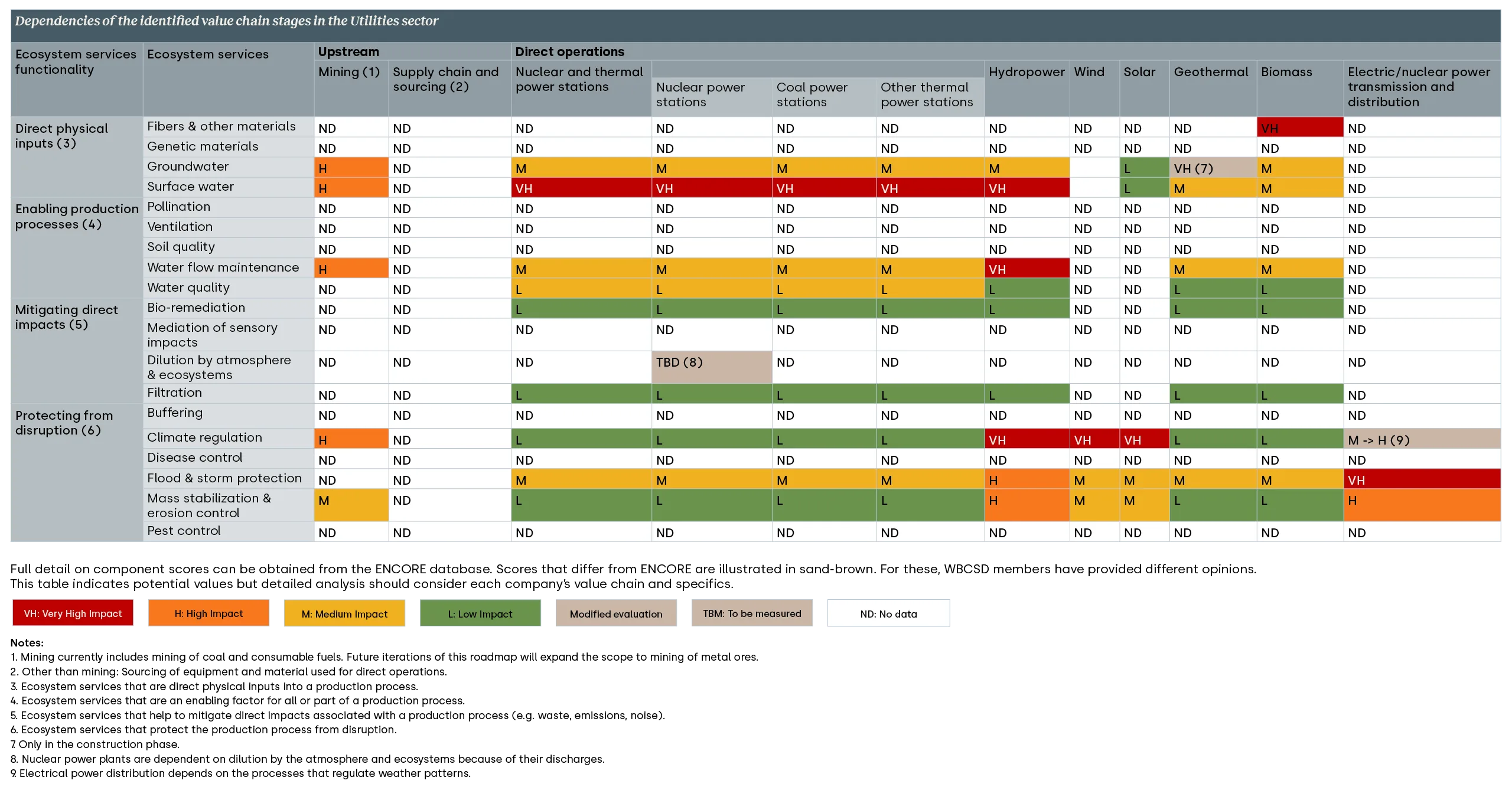
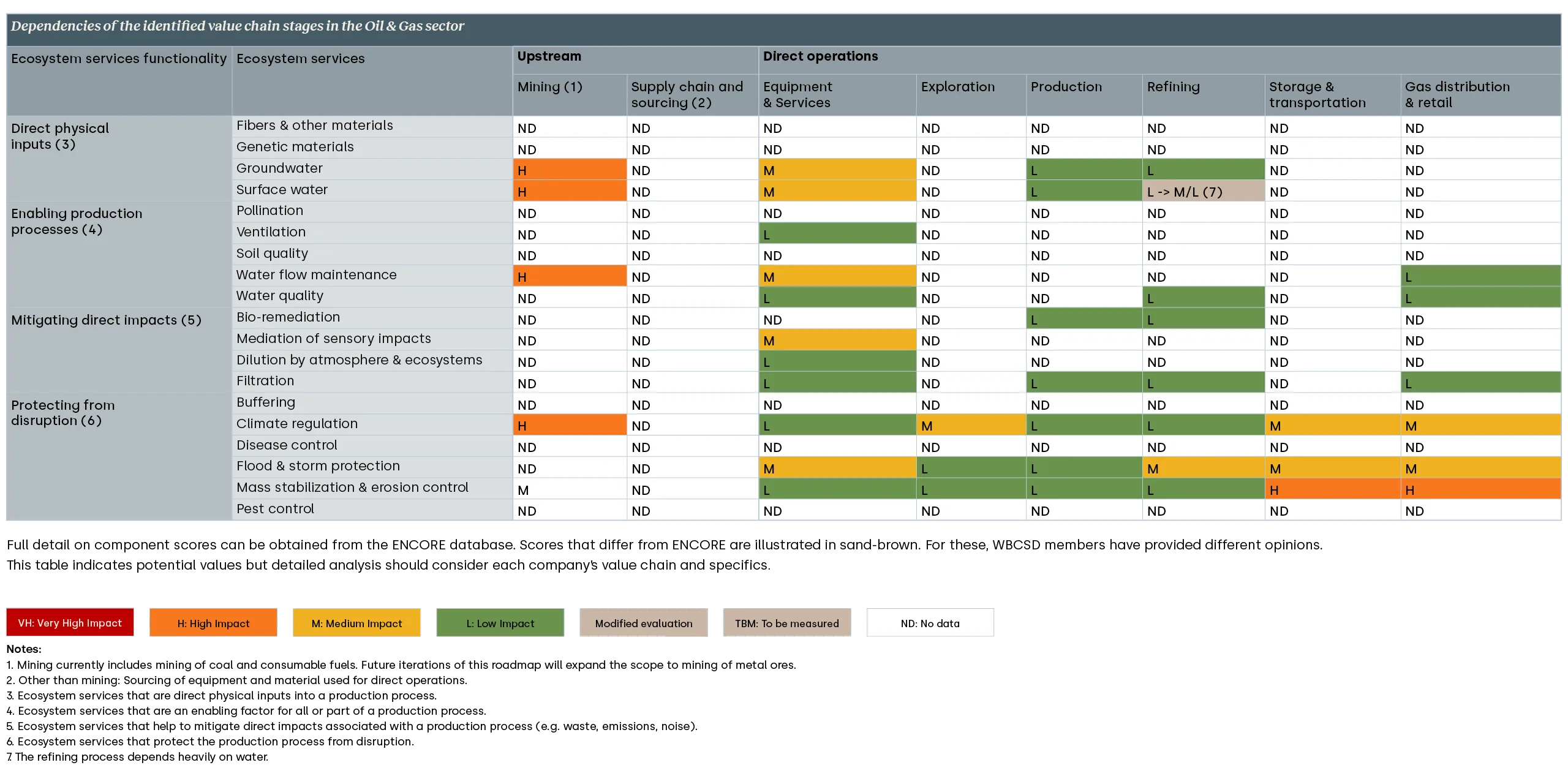
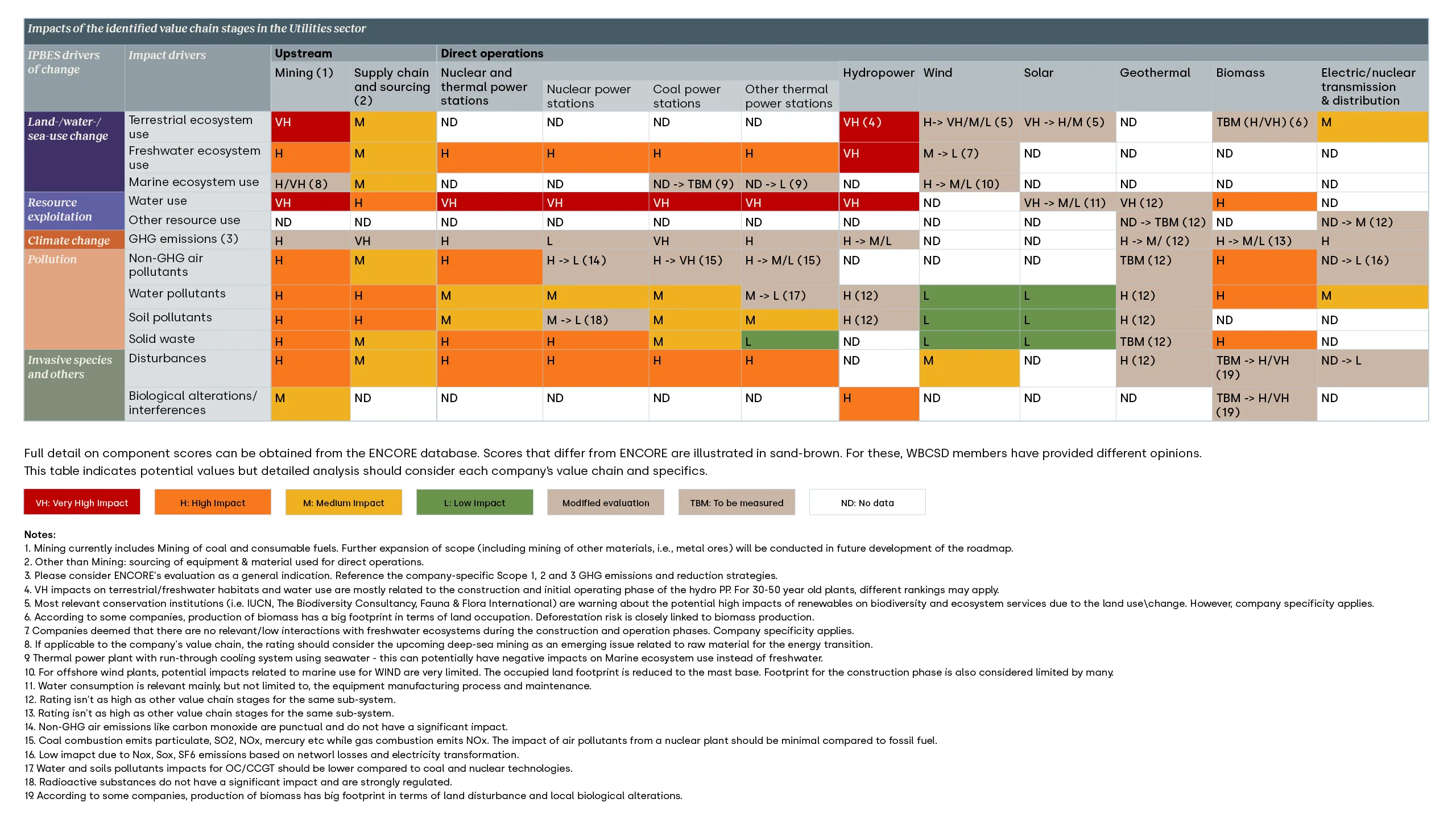
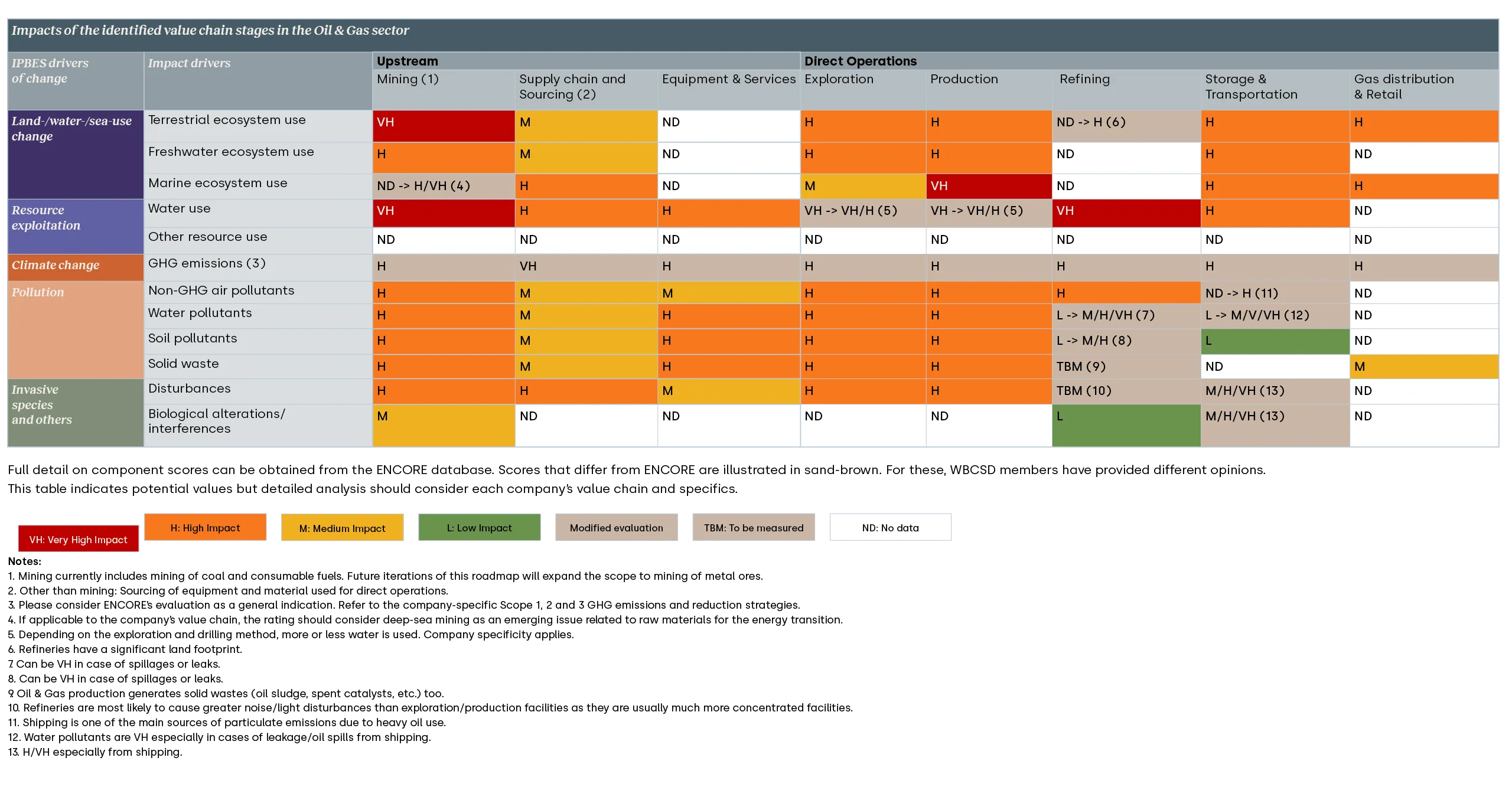
The tables below provide the outcomes from an assessment of the supply chain and direct operations of the oil and gas and utilities sectors. They offer companies foundational guidance to assess material impacts and dependencies. 

Companies should use them as a starting point and further refine them according to its circumstances. These impacts and dependencies are the most likely to require further risk and opportunity evaluation and to inform the development of nature-related actions and targets.  

The materiality ratings in the tables are based on the 2018–2023 version of the ENCORE (Exploring Natural Capital Opportunities, Risks and Exposure) database.  

Key nature-related impacts for the oil and gas sector

Download image

Key nature-related impacts for the utilities sector 

Download image

Key nature-related dependencies for the oil and gas sector 

Download image

Key nature-related dependencies for the utilities sector 

Download image

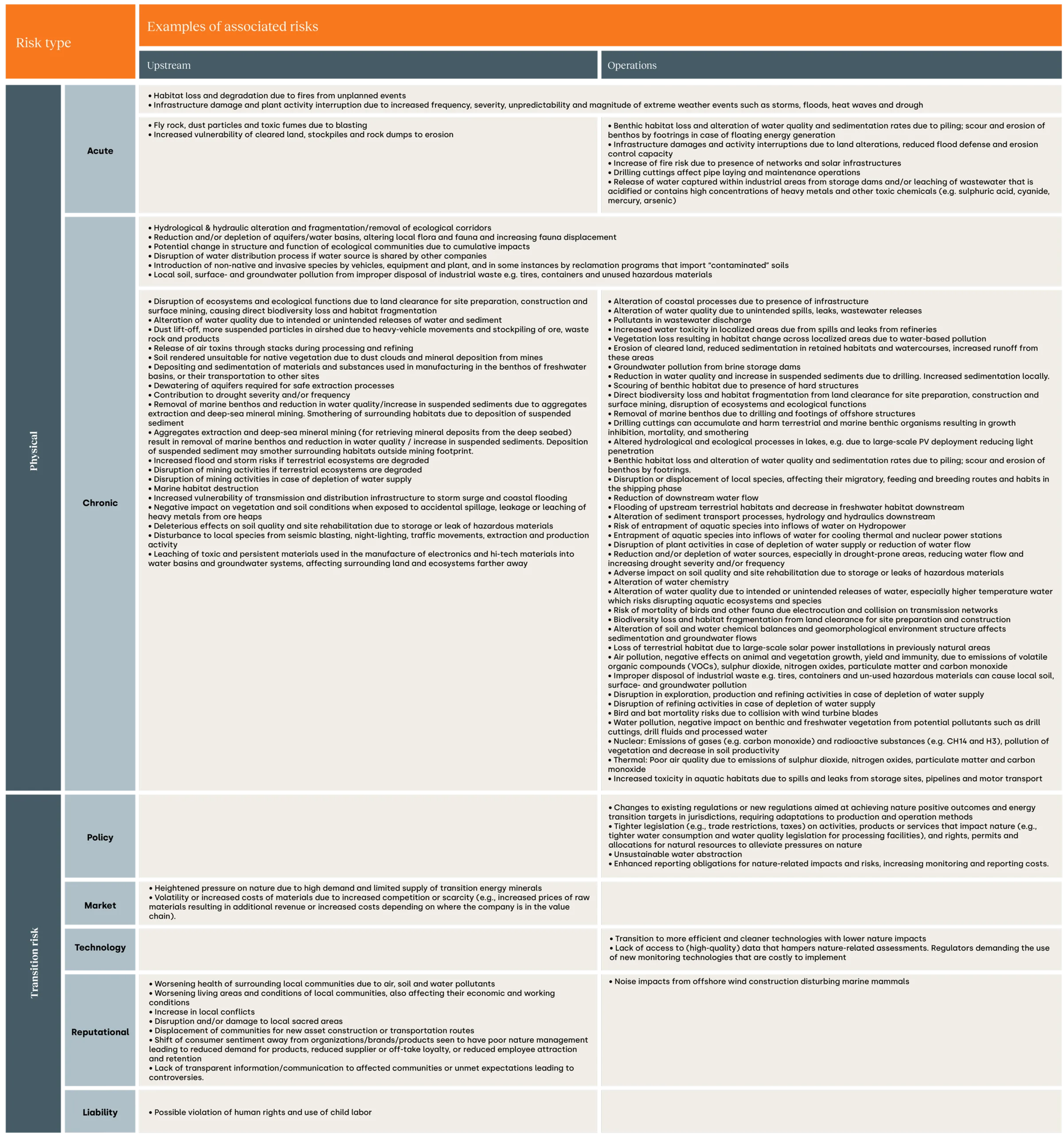
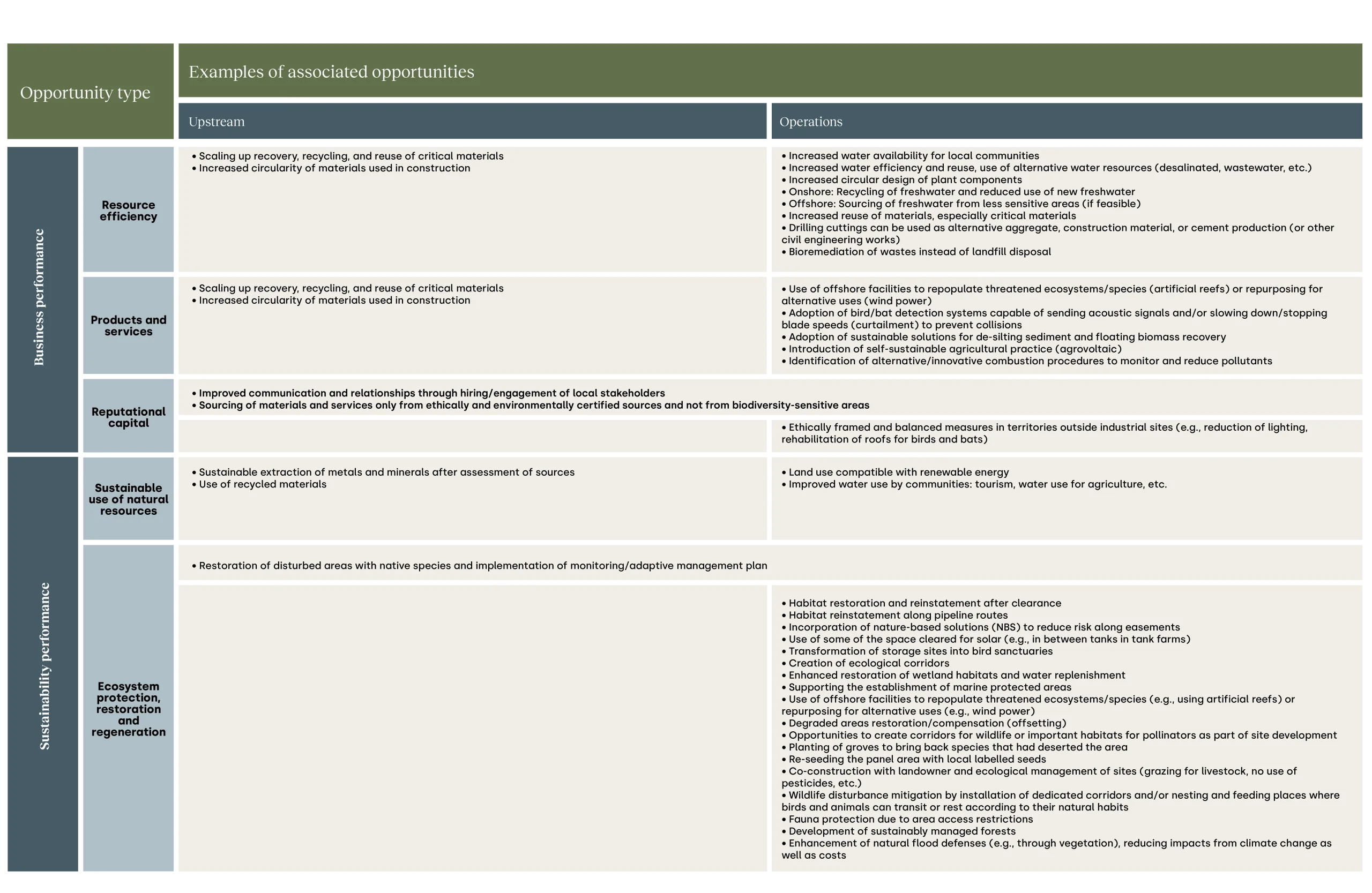
Risks & opportunities 

Nature-related issues can affect every part of a business – from physical and operational disruptions to transition pressures like new regulations, litigation and reputational risk, and even systemic threats as ecosystems start to fail.  

Companies that respond proactively by transforming business models, products, services and investments can leverage those same forces. They can gain a competitive edge, strengthen investor and stakeholder confidence, and build the operational resilience needed to thrive in a changing world.  

The table below outlines examples of key risks and opportunities for the energy system based on the TNFD framework.  
Further reading

Supply chain

Nature-related impacts and dependencies frequently originate in supply chains, associated with particular geographies and ecosystems several tiers removed from a company’s operations. To strengthen accountability along the value chain, companies operating downstream can align their nature-related actions and corresponding metrics to those of their suppliers.

These are the material dependencies and impacts in your supply chain

If your company sources bio-based products from the forest or agri-food sectors—such as paper, packaging, timber, or agricultural derivatives—it is likely exposed to specific risks and opportunities linked to these materials in its supply chain. If not managed sustainably, both sectors can drive land degradation, conversion, and other forms of biodiversity loss. However, bio-based products also play a crucial role in the transition to a low-carbon, nature-positive economy, supporting ecosystem restoration while ensuring the supply of raw materials for the bioeconomy – 99% of which comes from the agri-food and forest value chains.

The Portal currently covers only bio-based materials sourcing from the forest and agri-food sectors, with plans to include other key material inputs in the future.

Agri-food

Top 5 dependencies

Freshwater

Businesses need sufficient quantity, quality and flow of freshwater (in the form of groundwater, surface water and seasonal precipitation) to produce crops and animal feed, provide water for raising animals and maintaining land, and for use in downstream washing and processing. 

Land and soil quality

High-quality land and soils help optimize crop growth, produce sustainable yields, provide natural protection against erosion, floods and storms and build resilience against environmental challenges. 

Pollination

Pollinators play a vital role in the reproductive process of flowering plants, including numerous crops that yield fruits, vegetables, nuts and seeds and for some crops used as animal feed

Disease and pest control 

Nature’s ability to regulate diseases and pest populations is essential for safeguarding crops, ensuring food security and maintaining the productivity and quality of agricultural systems, as well as ensuring the health of livestock for animal protein. 

Climate regulation

Climate regulation is provided by nature through the long-term storage of carbon dioxide in soils and vegetable biomass. It is critical to optimize plant growth, enhance crop yields, protect companies from disruption (for example extreme weather events) and ensure the long-term sustainability of the agri-food system. 

Top 4 impacts

Freshwater use 

The vast withdrawal and consumption of groundwater and surface water for agricultural and livestock production puts pressure on finite freshwater resources. This results in water scarcity, ecological imbalances and competition for freshwater, while also contributing to environmental degradation, depletion of freshwater ecosystems and reduced soil water holding capacity. 

Land and water use change and degradation 

Damage to terrestrial and freshwater ecosystems contributes to biodiversity loss and negatively affects stored carbon. Impacts arise from land conversion (for example, approximately 50% of the world’s wetlands have been drained for agriculture6), deforestation (with agricultural expansion driving around 90% of global tropical deforestation7), intensification and soil degradation to grow agricultural products for human consumption and crops for animal feed and from the use of vast areas of land to feed, raise and produce animals. 

Pollution 

The agri-food system contributes to widespread pollution including freshwater, land, soil and non-greenhouse gas (GHG) air pollution. Key causes are the overuse of agrichemicals (including mineral and organic fertilizers and pesticides), fuels and feed supplements (for example, antibiotics) used to grow crops and raise animals, the use of energy from fossil fuels (for example, in transport and refrigeration) and plastics and packaging. 

Greenhouse gas (GHG) emissions 

Agri-food systems account for one-third of total anthropogenic GHG emissions, which  are released at all stages of the value chain and are, significantly contributing to climate change. Key sources include agricultural and livestock production (carbon dioxide and methane); land conversion and deforestation for crops and livestock; ineffective manure management; emissions from fertilizer production (carbon dioxide from fossil fuels) and field application (nitrous oxide); and fossil fuels used in processing and transportation (carbon dioxide). 

Forest

Top 6 dependencies

Wood fiber  

Wood is a key direct physical input throughout the production process. 

Freshwater 

Water is needed at many stages of the value chain including forest operations, pulp and paper mills, as well as paper recycling operations. 

Land and soil quality 

Healthy soil is essential for the growth of healthy forests. Degraded soils are prone to erosion and are nutrient-poor and water-permeable.

Bio-remediation ecosystem services 

Bioremediation occurs when biological systems such as micro-organisms prevent the contamination of soils and water by transforming toxic pollutants (for example, from fertilizers) into less hazardous or non-hazardous forms. 

Disease and pest control 

Without nature’s ability to regulate disease and pest populations, forests would be left vulnerable to parasites, bacteria, fungi or viruses, resulting in widespread losses or reductions in yields.

Climate regulation  

Climate regulation is critical for the sector as non-adapted forest ecosystems become increasingly unstable in a warming climate, leading to greater incidences of forest fires, droughts and pest outbreaks. 

Top 4 impacts

Biodiversity and habitat loss

Forests are the largest terrestrial carbon sinks, and they provide habitat for 80% of global terrestrial biodiversity. Forest conversion, as well as forest degradation and deforestation linked to unsustainable forest management leads to biodiversity loss and climate change. Although agriculture is the main driver of deforestation, between 2001-2015, 2-13% of forest conversion to other uses was due to tree plantations for wood products, with a sharp decline since 2013. Over the same period, an estimated 26% of global forest disturbances were due to degradation linked to forest products. This figure represents a temporary reduction in tree canopy cover (e.g., after harvest), without any indication of the severity. 

Greenhouse gas (GHG) emissions

As some segments of the forest products sector are energy intensive, reducing the reliance on fossil fuels is crucial. In 2021, on average, 67% of forest products companies’ energy came from renewable sources, mostly through the use of woody biomass derived from harvesting, processing and manufacturing wood fiber. 

Freshwater use  

In forest production, water-demanding tree species and nursery irrigation require large amounts of water. Water is also a critical input in industrial facilities used mostly to pull the wood and recovered fiber, to make paper and generate power. 

Pollution 

Production facilities can cause significant air, water, soil and noise pollution. In industrial facilities, these impacts come mainly from the incineration of process residuals and waste, the discharge of chemicals and wastewater, as well as solid waste disposal. They also come from waste disposal and decomposition in landfills further downstream.