
The transition to a low-carbon and circular economy requires a fundamental shift away from fossil-based feedstocks toward sustainable alternatives. While momentum is growing across industries, the scale-up of sustainable alternative feedstocks continues to face significant challenges, including fragmented definitions, inconsistent sustainability expectations and uncertainty around how feedstocks should be assessed and compared.
To help address these barriers, WBCSD has launched Unlocking Sustainable Alternative Feedstocks at Scale: A practical guidance for industry action and policy alignment, a new publication developed in collaboration with ERM and a diverse group of WBCSD member companies.
As demand for sustainable chemicals and materials continues to grow, companies are increasingly seeking practical tools to inform sourcing decisions and evaluate feedstock options. The publication responds to this need by providing a common framework for defining and assessing alternative feedstocks, supporting greater consistency, transparency and alignment across value chains. Through a structured assessment approach and practical examples, it aims to support more informed decision-making while creating a common foundation for stakeholders across the value chain.
To mark the launch, WBCSD will host the session “From Common Language to Market Action: Scaling Demand for Alternative Feedstocks” during New York Climate Week 2026. The session will bring together stakeholders from across value chains to discuss the role of common definitions, sustainability criteria and collaborative action in creating the market conditions needed to accelerate the uptake of sustainable alternative feedstocks at scale. It will be an important milestone in the transition away from fossil-based feedstocks and toward more circular, low-emission and resilient value chains.
Related
Content
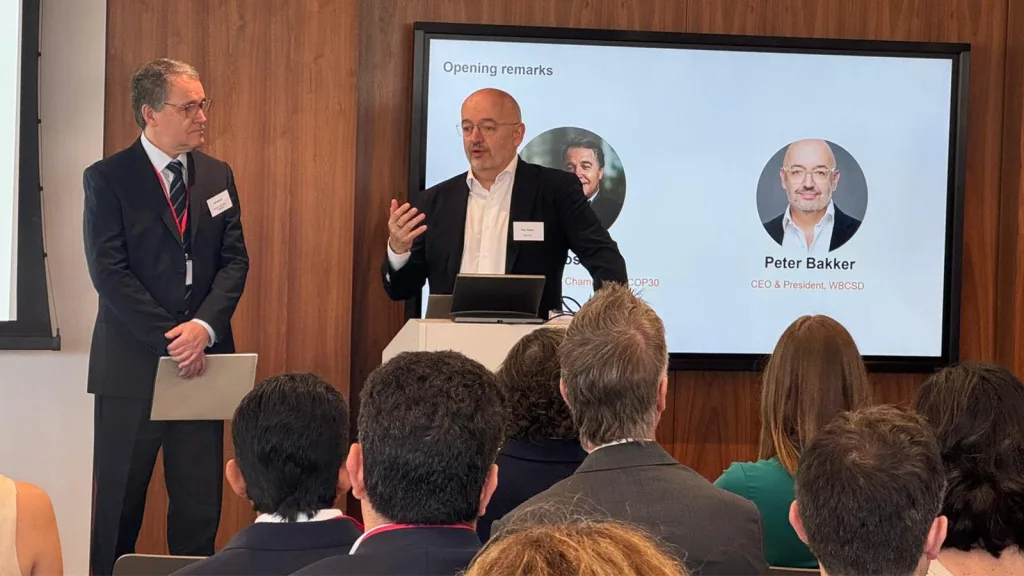
“From morality to materiality” – Highlights from London Climate Action Week 2025
3 July, 2025

Governments with clear net-zero policies capitalize on global business investment, new report finds
23 June, 2025

Businesses sound the alarm: Market barriers prevent critical net zero investments
31 October, 2024