
New WBCSD x KPMG report identifies the most influential risks to the sustainability agenda – and where business can act now
Geneva, 15 April 2026: A new report from the World Business Council for Sustainable Development (WBCSD), developed in collaboration with KPMG, identifies short-term decision-making as the most influential risk threatening progress on the sustainability agenda.
Safeguarding Sustainability: A Dynamic Risk Assessment for the Sustainability Agenda applies KPMG’s Dynamic Risk Assessment (DRA) methodology to map 20 interconnected risks shaping the future of sustainable business transformation. The report highlights where WBCSD, its members, and the wider business community can act most effectively to safeguard progress and accelerate change in an increasingly uncertain global environment.
Charting a course through uncertainty
Sustainability is increasingly regarded by business leaders as being inseparable from enterprise value – shaping growth, resilience, cost of capital and long-term competitiveness
However, we should not assume that continued progress is inevitable. We are operating in a world defined by mounting complexity, volatility and fragmentation. Trust in institutions is under strain, geopolitical tensions are rising, and economic pressures are intensifying. In certain corners, a backlash against sustainability is gaining momentum.
At this critical juncture, KPMG and WBCSD have collaborated on this report to deepen our understanding of these risks and identify critical leverage points where WBCSD, its members, and other sustainability-focused organizations can intervene most effectively to safeguard progress and accelerate sustainable transformation in today’s uncertain world.
Moving beyond traditional risk approaches
Traditional risk assessments tend to examine risks individually, focusing on likelihood and severity. In today’s deeply interconnected world, this approach is no longer sufficient.
Using KPMG’s Dynamic Risk Assessment, the report identifies 20 critical risks facing the sustainability agenda and, crucially, maps how these risks interact as part of a complex network. This systems‑based view reveals which risks are most influential in driving others, and which are most vulnerable to being amplified by change elsewhere in the system.
Short-termism at the center of the risk network
The findings are clear: short‑termism sits at the center of the sustainability risk network.
Short‑term decision‑making both influences – and is influenced by – almost every other major risk, leaving the sustainability agenda more vulnerable to being crowded out by competing priorities and immediate pressures.
Other highly influential and vulnerable risks include distance to problem (the disconnect between decision-makers and real-world impacts), fractal dissonance (difficulty recognizing system-level patterns), and the underestimation of exponential tipping points.
A behavioral challenge
Many of the most influential risks identified in the report are behavioral and cognitive in nature. While some risks stem from political and economic conditions, several of the most consequential drivers of sustainability backsliding relate to how individuals and organizations perceive complexity, time horizons, and systemic change.
This means they are within the sphere of influence of business leadership; through incentives, governance structures, organizational culture, and education.
Learning – and the ability to continuously learn, unlearn, and relearn – emerges as a critical capability for managing sustainability risks and maintaining momentum for transformation.
Where business can act with impact
Business is uniquely positioned to address behavioral risks at scale. Companies have a unique capacity to shape how people think and act every day. By influencing their own employees and leaders, as well as connecting with suppliers, partners, customers, and policymakers, businesses can help counter short-termism, reconnect decision-makers to real-world impacts, and strengthen systems thinking across value chains.
For its part, WBCSD is committed to advancing this agenda through its education and capacity-building work – convening leading thinkers, partnering with academic and learning institutions globally, and embedding behavioral insights across its programs,
A call to collective action
Safeguarding Sustainability is designed to support WBCSD members and the wider business community in understanding the risks facing the sustainability agenda, prioritizing action where it matters most, and strengthening collective responses to shared challenges.
Read the full report to explore the most influential risks to the sustainability agenda, understand where collective action can deliver the greatest impact, and learn how business can safeguard and accelerate progress in an uncertain world.
Discover the report – available in English and Japanese – Safeguarding Sustainability: A Dynamic Risk Assessment for the Sustainability Agenda.
Outline
Related
Content
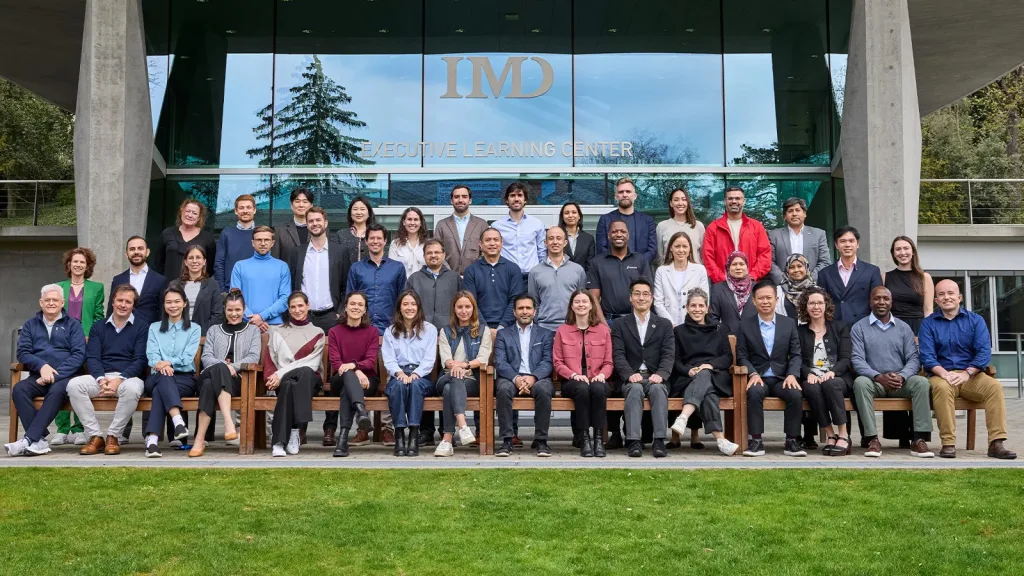
Insights from the first module of the Leadership Program 2025
18 April, 2025

New e-course empowers businesses to strengthen fair recruitment practices
17 February, 2025

WBCSD and Stanford University announce new immersive program to drive sustainable transformation across industries
12 December, 2024