To meet Net Zero 2040 goals, P&G needed standardized carbon data from suppliers to identify real reduction opportunities. PACT, a global open standard for product-level carbon data, enabled P&G to collect data from 100+ suppliers and start making smarter sourcing decisions.
Background
For over 185 years, P&G brands have been trusted in millions of living rooms, kitchens, laundry rooms and bathrooms around the world. P&G operates in approximately 70 countries worldwide, and its products are sold in about 180 countries and territories. P&G’s climate journey began over a decade ago with goals at its own manufacturing facilities, and has since expanded and accelerated to address greenhouse gas (GHG) emissions across the life cycle of its products, and within global operations and the supply chain.
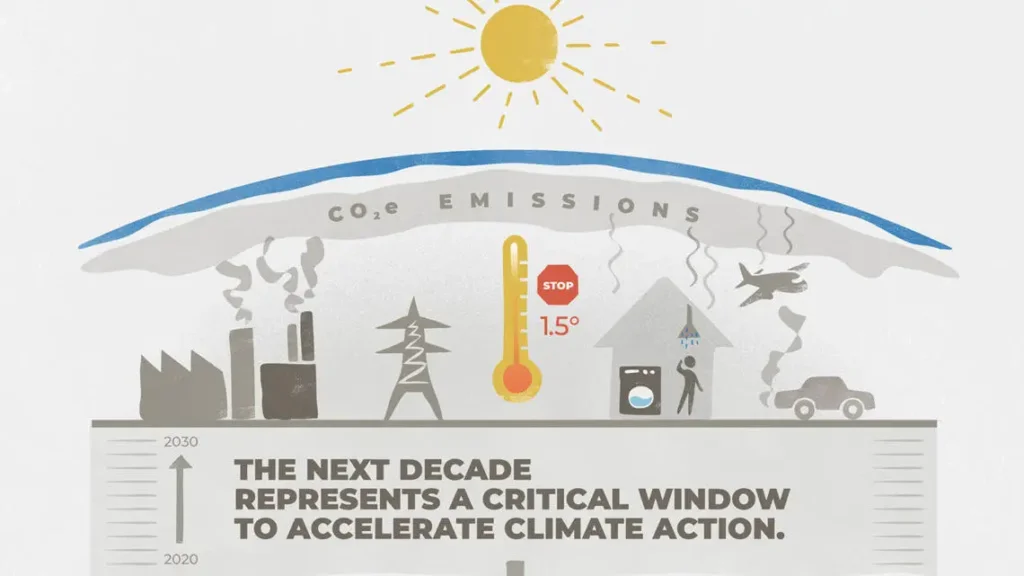
In 2021, P&G announced its ambition to reach Net Zero GHG emissions across its supply chain and operations by 2040. To help pace progress toward this ambition, the company has established near-term science-based targets for 2030, including a 40% reduction in supply chain emissions (purchased goods and services) per unit of production compared with a 2020 baseline.
Jan Geisler, Vice President, Purchases Excellence & Transformation, provides perspective: “We know we may not have all the answers today, but we will create them together. We partner with our suppliers to understand where they are today, their emission reduction plans and identify how we can collaborate on future solutions.”
Taking Action
P&G participates in the World Business Council for Sustainable Development’s Partnership for Carbon Transparency (WBCSD PACT) to enable collaboration between a diverse range of stakeholders, help establish standardized approaches and guidelines related to methodology and data exchange technology across industry, enable a trusted and holistic foundation for measurement, and accelerate decarbonization through data transparency of emissions in the value chain.
P&G is helping grow the low-carbon materials market for the consumer goods industry through strategic partnerships with suppliers across the value chain, ranging from large-scale global companies to small-scale start-ups. For example, P&G is investing in projects with key suppliers that have the potential to reduce several million metric tons of CO₂ over the next decade. These efforts span advanced technologies including carbon capture, storage and utilization (CCS/CCU), hydrogen utilization, bio-based solutions, advanced recycling technologies, and renewable energy.
Clear and uniform carbon accounting standards, like PACT, will help P&G accelerate and scale solutions — not only for P&G but also for the broader consumer goods industry over the long term.
Environmental sustainability is deeply embedded in how we conduct our business across all operations, supply chains, and brands. We seek to deliver Environmental Impact at three levels: reducing our own impact, helping consumers to reduce their impact, and helping scale solutions across industries.
– Virginie Helias, Chief Sustainability Officer, P&G
Implementation
P&G is currently collecting PACT-based product carbon footprint data from its suppliers to more reliably track progress in reducing supply chain GHG emissions. The company has deployed its proprietary Greenchain Platform to systemically collect product carbon footprints from key suppliers. This platform makes data more readily available to P&G’s internal teams and enables consistent reporting via an automated system. The approach is shared through P&G’s Supplier Citizenship site.
The first step in P&G’s journey involved open dialogue through organized workshops, where suppliers could share their perspectives on sustainability and the challenges in measuring their carbon footprints. This approach created an environment where all suppliers felt empowered to share insights, even in traditionally protective categories such as fragrance raw materials.
We know we may not have all the answers today, but we will create them together. We partner with our suppliers to understand where they are today, their emission reduction plans and identify how we can collaborate on future solutions.
– Jan Geisler, Vice President, Purchases Excellence & Transformation, P&G
Impact
More than 100 suppliers have joined the current campaign for product-level data collection and evaluation. Many suppliers have also invested in their own sustainability initiatives, often involving external experts, recognizing that their commitment to reducing carbon footprints enhances their competitiveness in the marketplace.
Lessons Learned
P&G’s experience reinforces a pattern PACT sees across its member base: companies do not need perfect data to start creating business value from carbon transparency. P&G began collecting supplier-level PCF data before every supplier had a fully mature measurement system in place, and used that imperfect but improving dataset to inform real sourcing and investment decisions. Waiting for complete data across the supply chain would have delayed action by years; starting with what was available, and improving it over time, did not.
The case also underscores that data collection is fundamentally a relationship exercise, not just a technical one. P&G’s workshop-based approach, bringing suppliers into the process as partners rather than treating them as reporting obligations, was what unlocked participation even in categories where suppliers are traditionally guarded about sharing information. For PACT, this confirms that standardized methodology and interoperable infrastructure only deliver value when paired with genuine supplier engagement; the framework enables trust, but the relationship is what generates the data.
Finally, P&G’s approach shows how PCF data can move beyond a compliance or reporting exercise and become a genuine input to supplier evaluation and market competitiveness, which is the kind of business-first use case PACT aims to make possible at scale across industries.
Looking Ahead
P&G will continue to grow collaboration with its suppliers through workshops and campaigns, driving the visibility and tracking of purchased goods’ carbon footprints and emission reductions. The company also sees the necessity, and supports the synchronization, of these efforts across value chains and industry boundaries, enabled by technology. The goal is to establish a trusted and holistic foundation for measurement, covering the majority of raw and packaging materials relevant to P&G’s supply chain emissions.
We invite our partners to adopt the PACT methodology, which provides an effective data framework – to support the reduction of carbon footprints.
– Jan Geisler, Vice President, Purchases Excellence & Transformation
WBCSD Reflection
P&G’s experience reinforces a pattern PACT sees across its member base: companies do not need perfect data to start creating business value from carbon transparency. P&G began collecting supplier-level PCF data before every supplier had a fully mature measurement system in place, and used that imperfect but improving dataset to inform real sourcing and investment decisions. Waiting for complete data across the supply chain would have delayed action by years; starting with what was available, and improving it over time, did not.
The case also underscores that data collection is fundamentally a relationship exercise, not just a technical one. P&G’s workshop-based approach, bringing suppliers into the process as partners rather than treating them as reporting obligations, was what unlocked participation even in categories where suppliers are traditionally guarded about sharing information. For PACT, this confirms that standardized methodology and interoperable infrastructure only deliver value when paired with genuine supplier engagement; the framework enables trust, but the relationship is what generates the data.
Finally, P&G’s approach shows how PCF data can move beyond a compliance or reporting exercise and become a genuine input to supplier evaluation and market competitiveness, which is the kind of business-first use case PACT aims to make possible at scale across industries.
Outline