The pharmaceutical sector, which exists to improve human health and quality of life, relies on nature for many of its operations and innovations, such as water for the production of biological medical products like vaccines.
The sector, while focused on improving human health, is also a contributor to environmental impacts. The sector’s complex value chain brings unique challenges in identifying and managing nature-related impacts and dependencies.
Pharmaceutical sector value chain
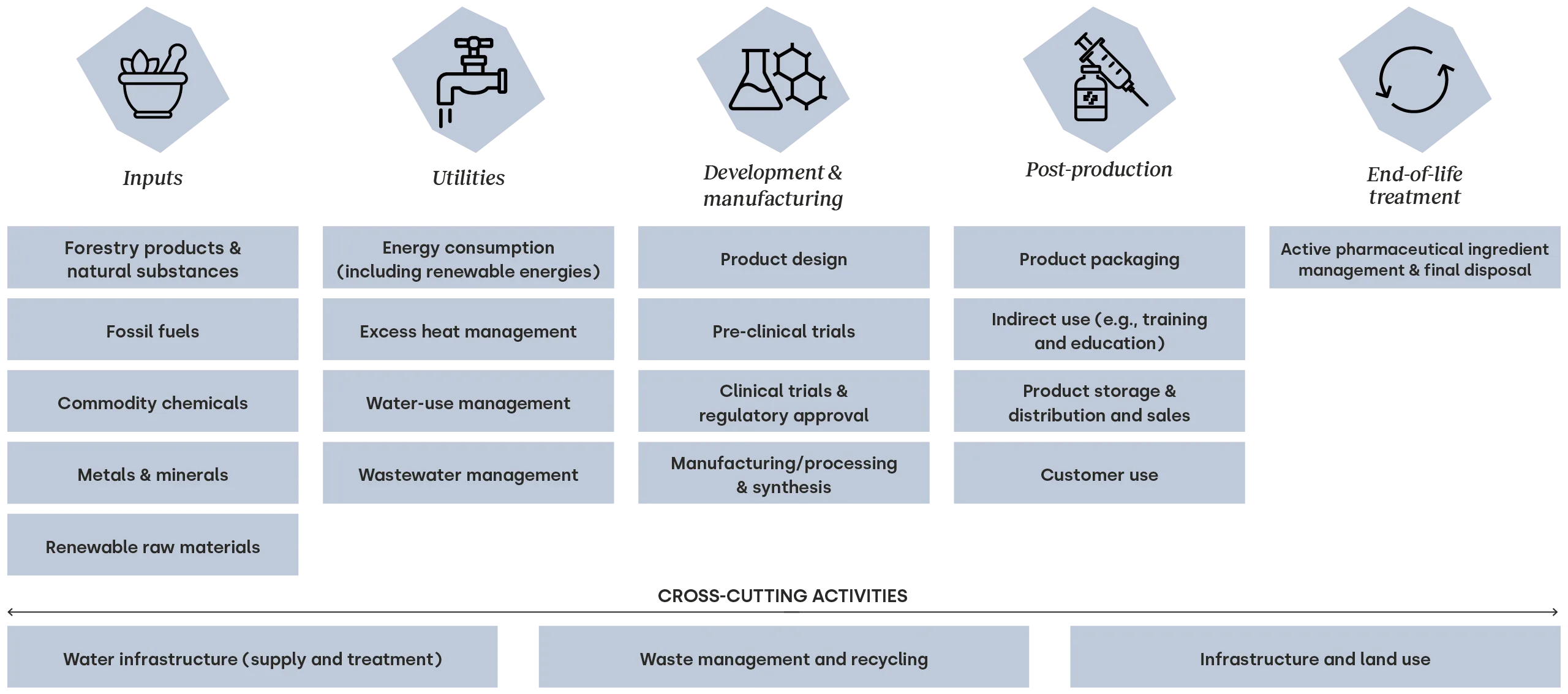
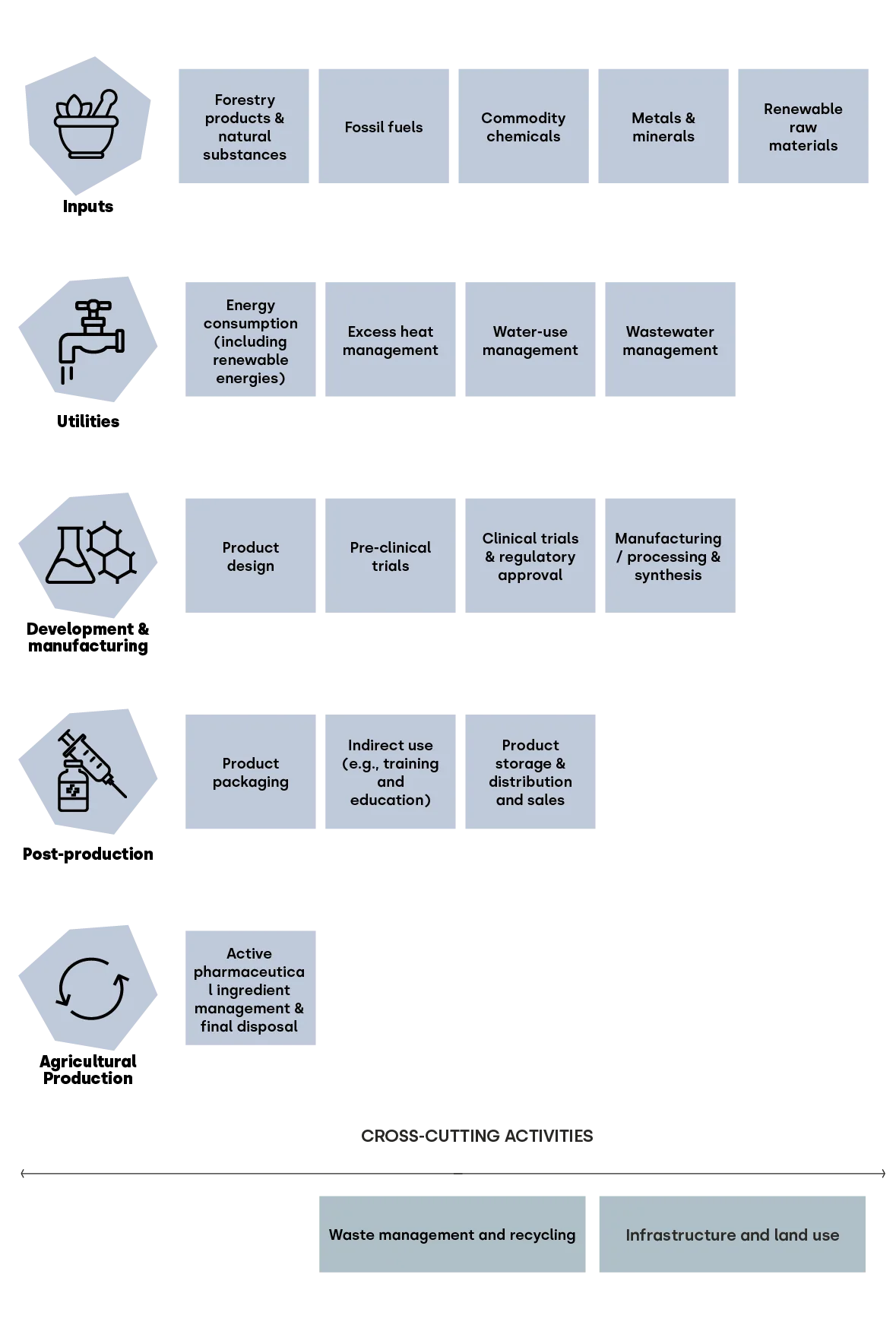
The pharmaceutical value chain encompasses a variety of processes. These range from inputs such as raw material production to manufacturing, processing and the distribution of pharmaceutical products, as well as patient use and end-of-life disposal.
The value chain mapping aligns with TNFD’s Additional Guidance by sector and working group members refine it through their input.
Dependencies, impacts, risks and opportunities
A sector-level overview of dependencies, impacts, risks and opportunities (DIROs) provides a useful foundation for a company-level materiality assessment because it highlights the typical DIROs relevant to companies operating in the same sector.
The DIROs capture how businesses in a sector interact with nature – relying on and impacting ecosystem services – and how these translate into risks and opportunities.
Companies should do a company-level materiality assessment – as recommended by the Natural Capital Protocol, SBTN and TNFD frameworks – to evaluate how the potential sector-level DIROs apply to the specific context of that company. The materiality assessment provides greater visibility into the company’s relationship with nature, enabling it to:
- Identify and manage risks;
- Uncover new business opportunities;
- Respond effectively to evolving investor and regulatory expectations.
This ultimately helps future-proof the business.
Methodologies for company-level materiality assessments include the Taskforce on Nature-related Financial Disclosures Guidance on the identification and assessment of nature-related issues: the LEAP approach and Science Based Targets Network’s Step 1: Assess your impacts on nature.
Dependencies and impacts in the pharmaceutical sector
A sector-level overview of dependencies and impacts provides a useful foundation for a company-level materiality screening. It highlights the typical dependencies and impacts relevant to companies operating within the same sector.
Below are the top dependencies and impacts identified for the pharmaceutical sector.
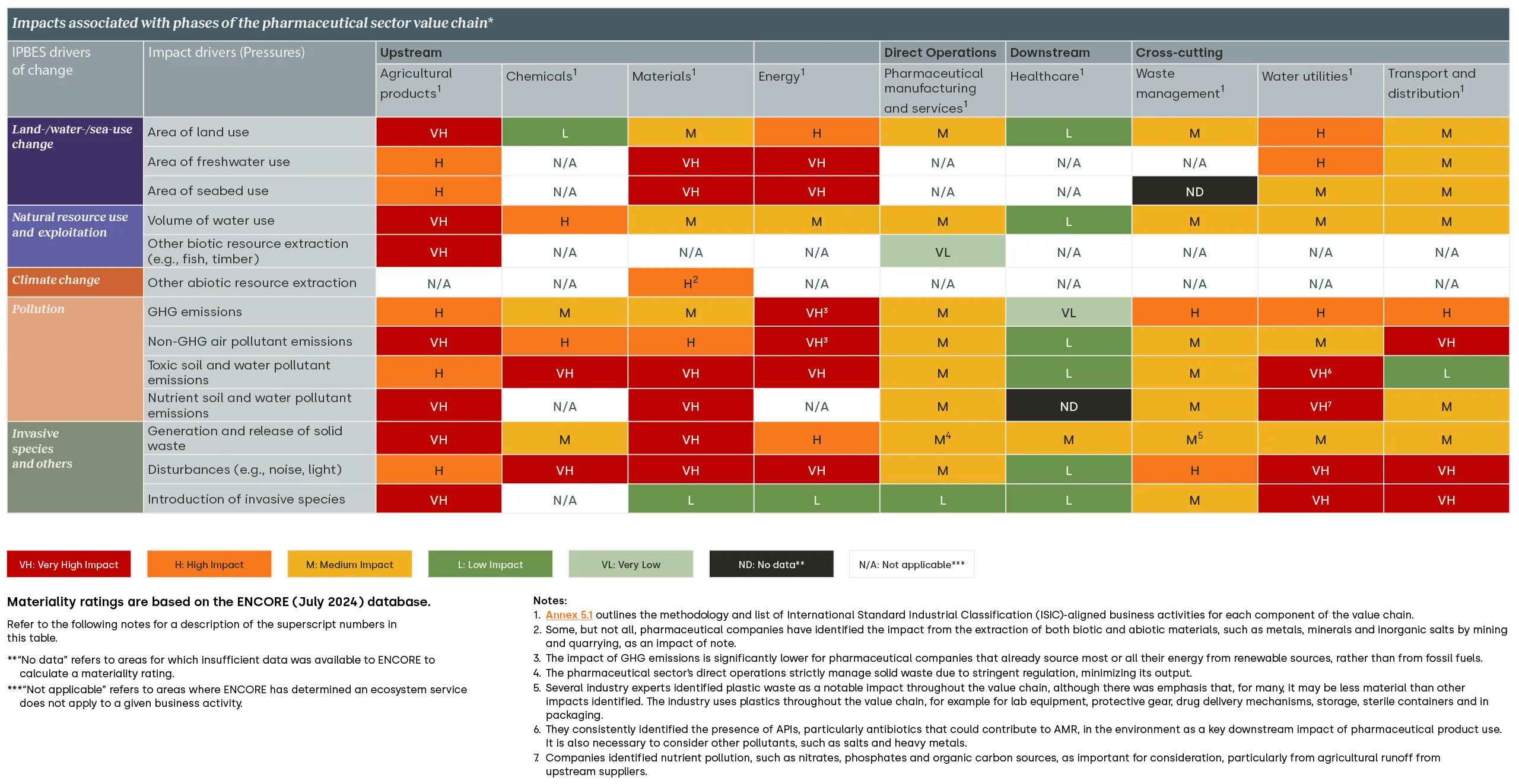
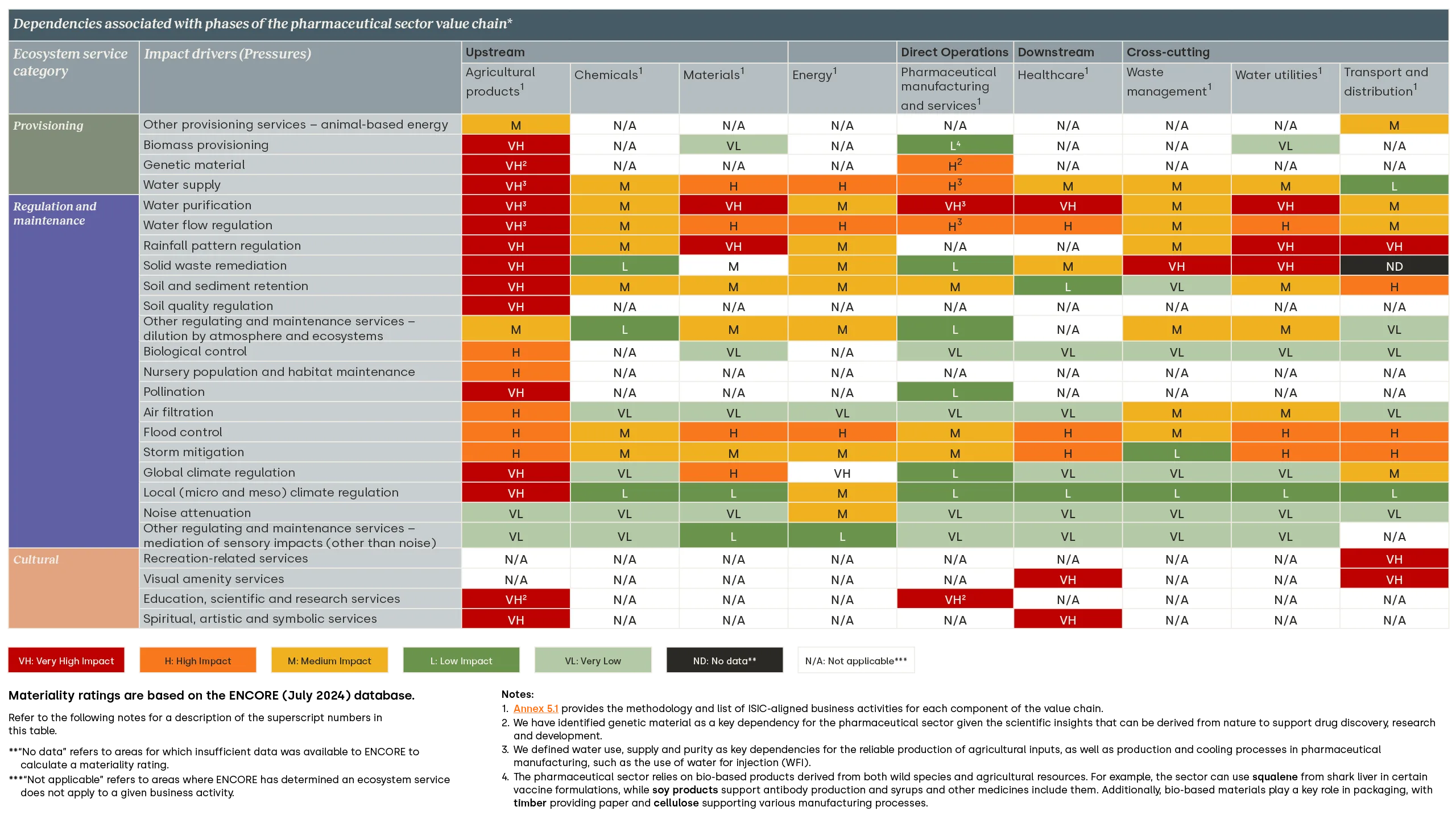
The tables below provide a complete list of potential nature-related impacts and dependencies, where they are likely to occur in the pharmaceutical value chain and their potential materialities.
The list is the result of a generalized assessment and will require further risk and opportunity evaluation before companies use it to inform the development of nature-related actions and targets.
The materiality ratings in the diagrams are based on the 2024 version of the ENCORE (Exploring Natural Capital Opportunities, Risks and Exposure) database.
Risks & opportunities
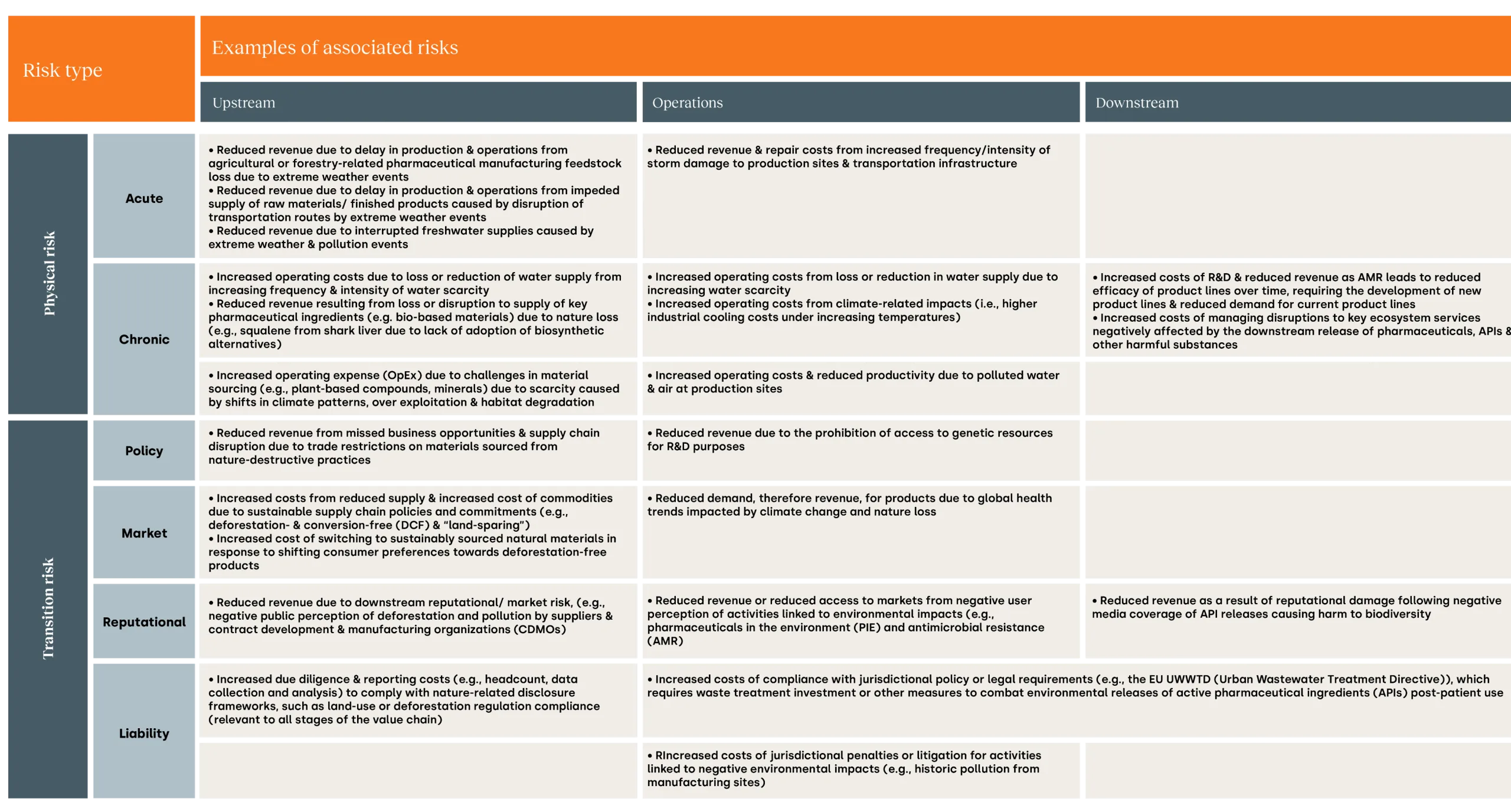
Nature-related issues can affect every part of a business – from physical and operational disruptions to transition pressures like new regulations, litigation and reputational risk, and even systemic threats as ecosystems start to fail.
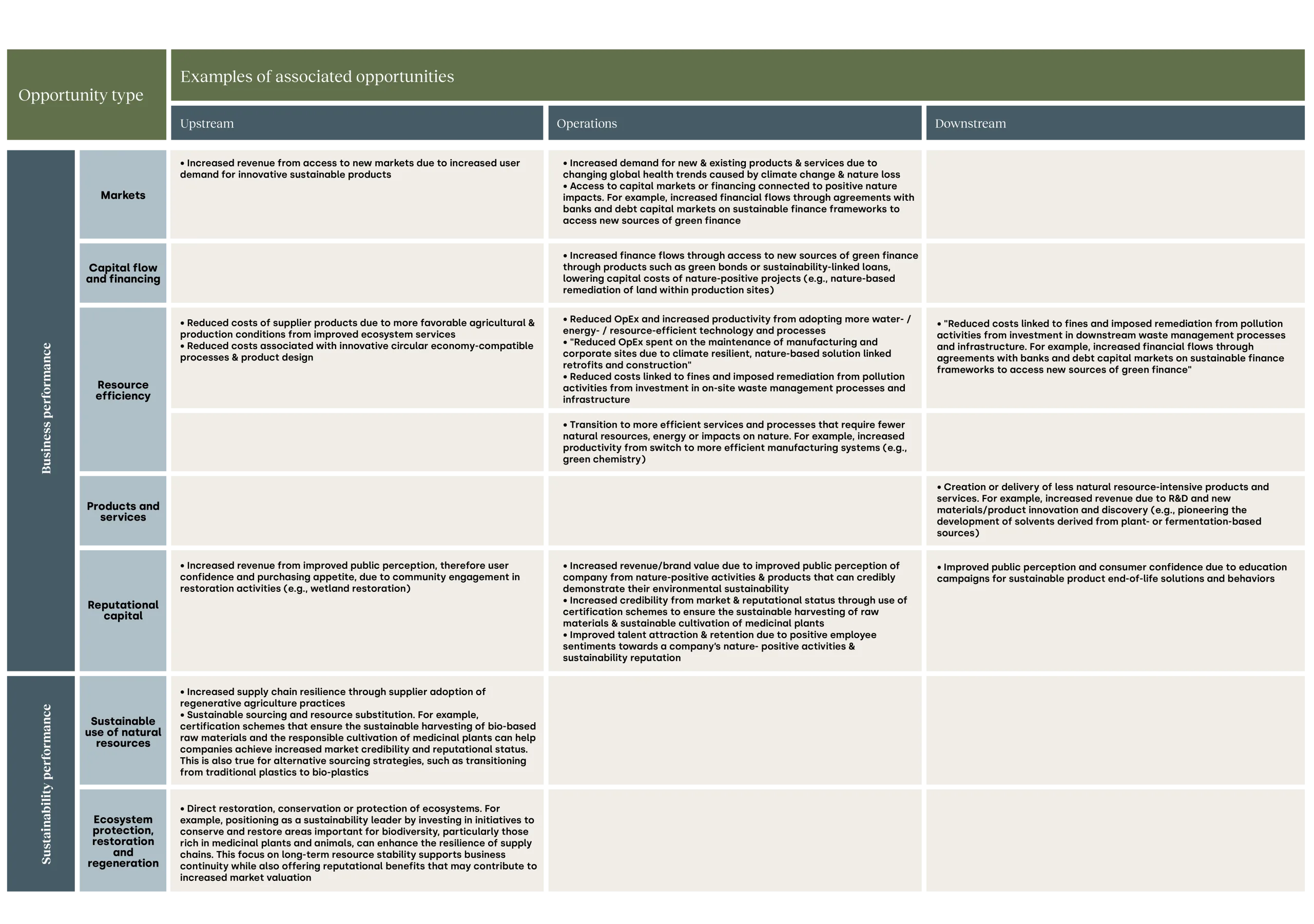
Companies that respond proactively by transforming business models, products, services and investments can leverage those same forces. They can gain a competitive edge, strengthen investor and stakeholder confidence, and build the operational resilience needed to thrive in a changing world.
The table below outlines examples of key risks and opportunities for the pharmaceutical sector, based on the TNFD framework.