The built environment system is responsible for 40% of global CO2 emissions, 40% of global resource use and 40% of global waste streams. The system is set to double in size as the global population is expected to reach 9.8 billion in 2050, putting great pressure on nature through increased water use, release of pollutants and production of waste and the associated greenhouse gas (GHG) emissions.
There are, however, significant opportunities to reduce environmental impacts and contribute to nature restoration by adopting circular approaches in building material production systems and managing waste streams.
Built environment system value chain
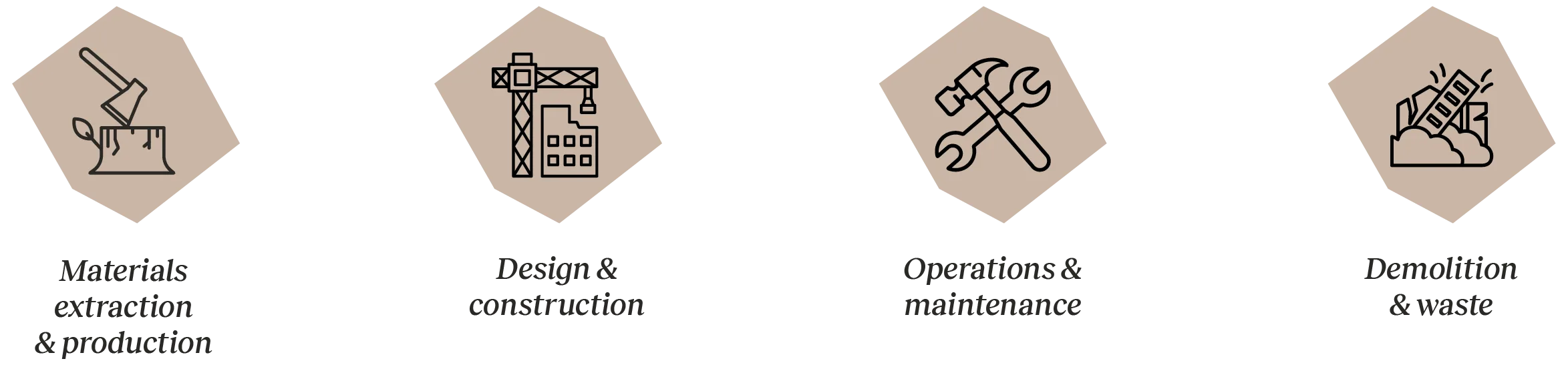
Four key stages describe the built environment value chain in the life cycle of a project:
- Material extraction and production;
- Design and construction;
- Operations and maintenance;
- Demolition and waste.
The value chain mapping aligns with TNFD’s Additional Guidance by sector and working group members refine it through their input.
Dependencies, impacts, risks and opportunities
A sector-level overview of dependencies, impacts, risks and opportunities (DIROs) provides a useful foundation for a company-level materiality assessment because it highlights the typical DIROs relevant to companies operating in the same sector.
The DIROs capture how businesses in a sector interact with nature – relying on and impacting ecosystem services – and how these translate into risks and opportunities.
Companies should do a company-level materiality assessment – as recommended by the Natural Capital Protocol, SBTN and TNFD frameworks – to evaluate how the potential sector-level DIROs apply to the specific context of that company. The materiality assessment provides greater visibility into the company’s relationship with nature, enabling it to:
- Identify and manage risks;
- Uncover new business opportunities;
- Respond effectively to evolving investor and regulatory expectations.
This ultimately helps future-proof the business.
Methodologies for company-level materiality assessments include the Taskforce on Nature-related Financial Disclosures Guidance on the identification and assessment of nature-related issues: the LEAP approach and Science Based Targets Network’s Step 1: Assess your impacts on nature.
Dependencies and impacts in the built environment system
A sector-level overview of dependencies and impacts provides a useful foundation for a company-level materiality screening. It highlights the typical dependencies and impacts relevant to companies operating within the same sector.
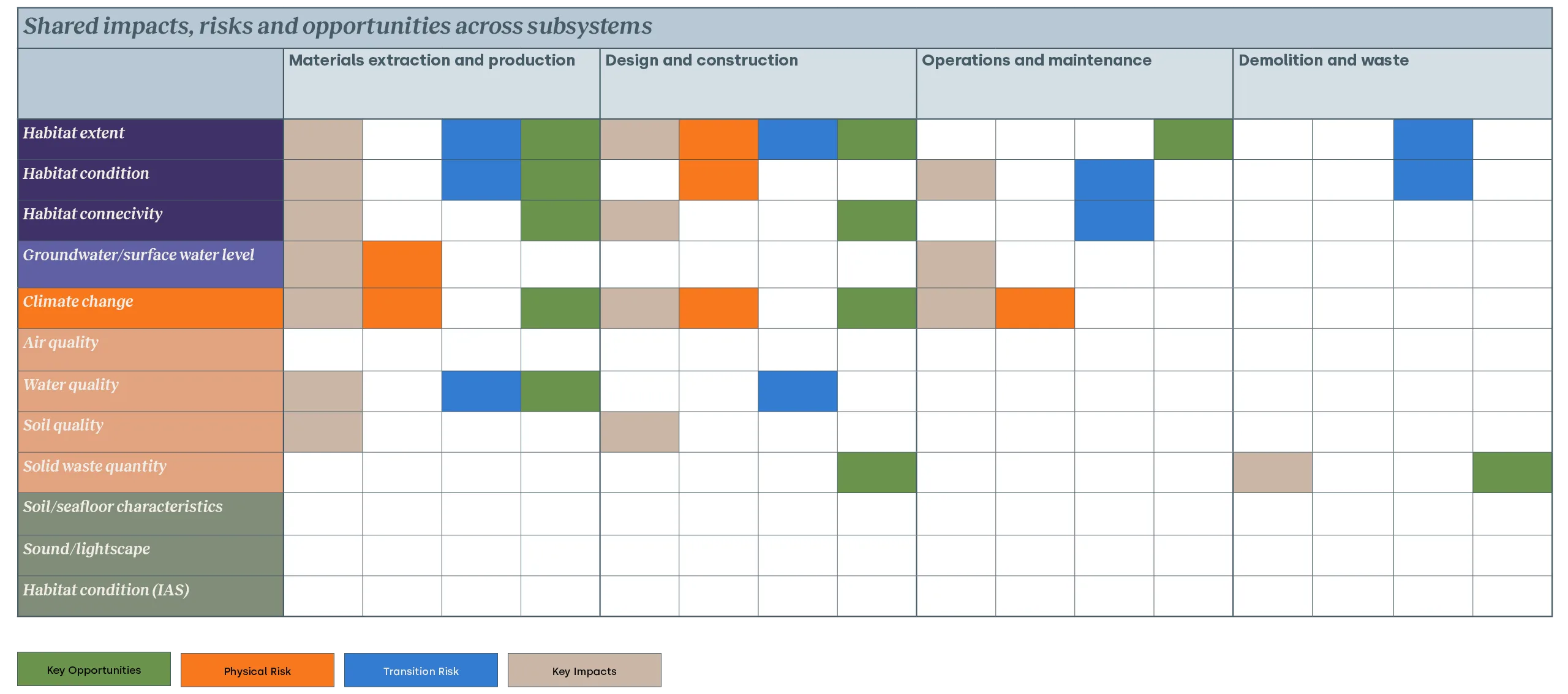
Below are the top dependencies and impacts identified for the built environment system.
The table below summarizes the key impacts, risks and opportunities shared across the four built environment subsystems and the fifth cross-cutting subsystem: buildings; urban infrastructure; transport infrastructure; marine and coastal infrastructure; and extraction (cross-cutting).
The dependencies on nature are covered directly through the identification of risks. The table below is based on the 2018–2023 version of the ENCORE (Exploring Natural Capital Opportunities, Risks and Exposure) database.
Detailed tables for each subsystem can be found in The Roadmap to Nature Positive: Foundations for the built environment system (Annex 2: Impact tables and Annex 4: Risks and Opportunities tables).
Risks & opportunities
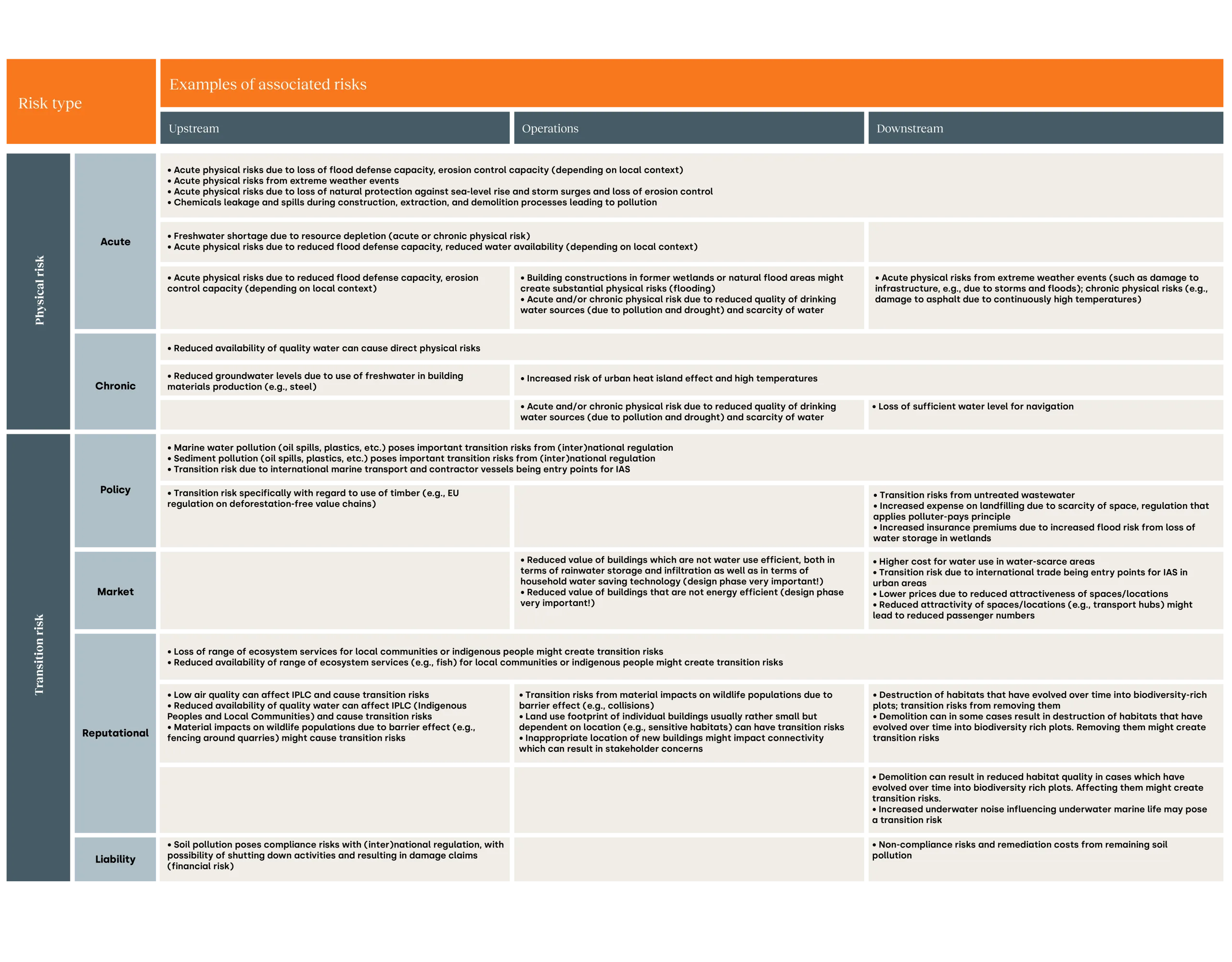
Nature-related issues can affect every part of a business – from physical and operational disruptions to transition pressures like new regulations, litigation and reputational risk, and even systemic threats as ecosystems start to fail.
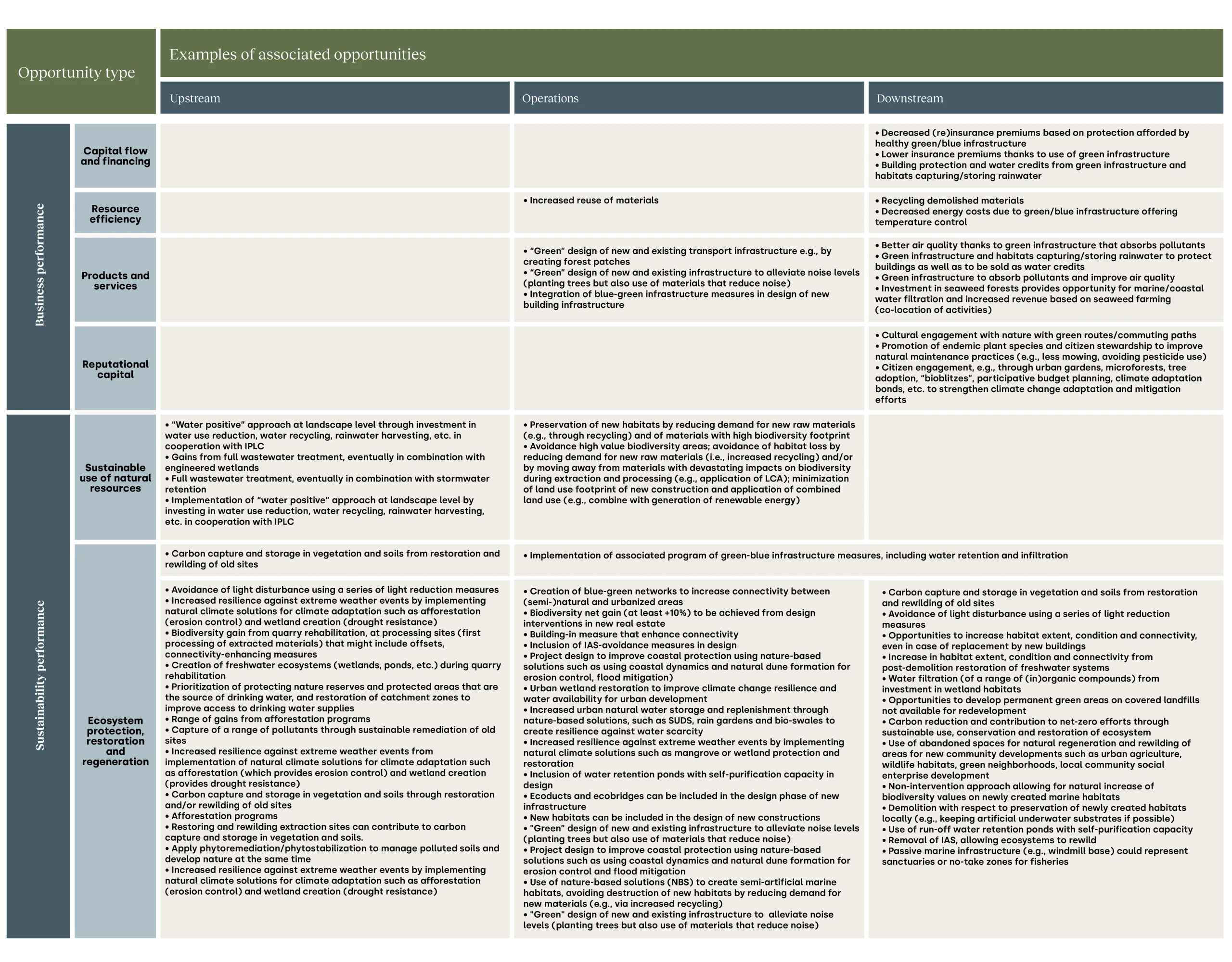
Companies that respond proactively by transforming business models, products, services and investments can leverage those same forces. They can gain a competitive edge, strengthen investor and stakeholder confidence, and build the operational resilience needed to thrive in a changing world.
The table below outlines examples of key risks and opportunities for the built environment system, based on the TNFD framework.