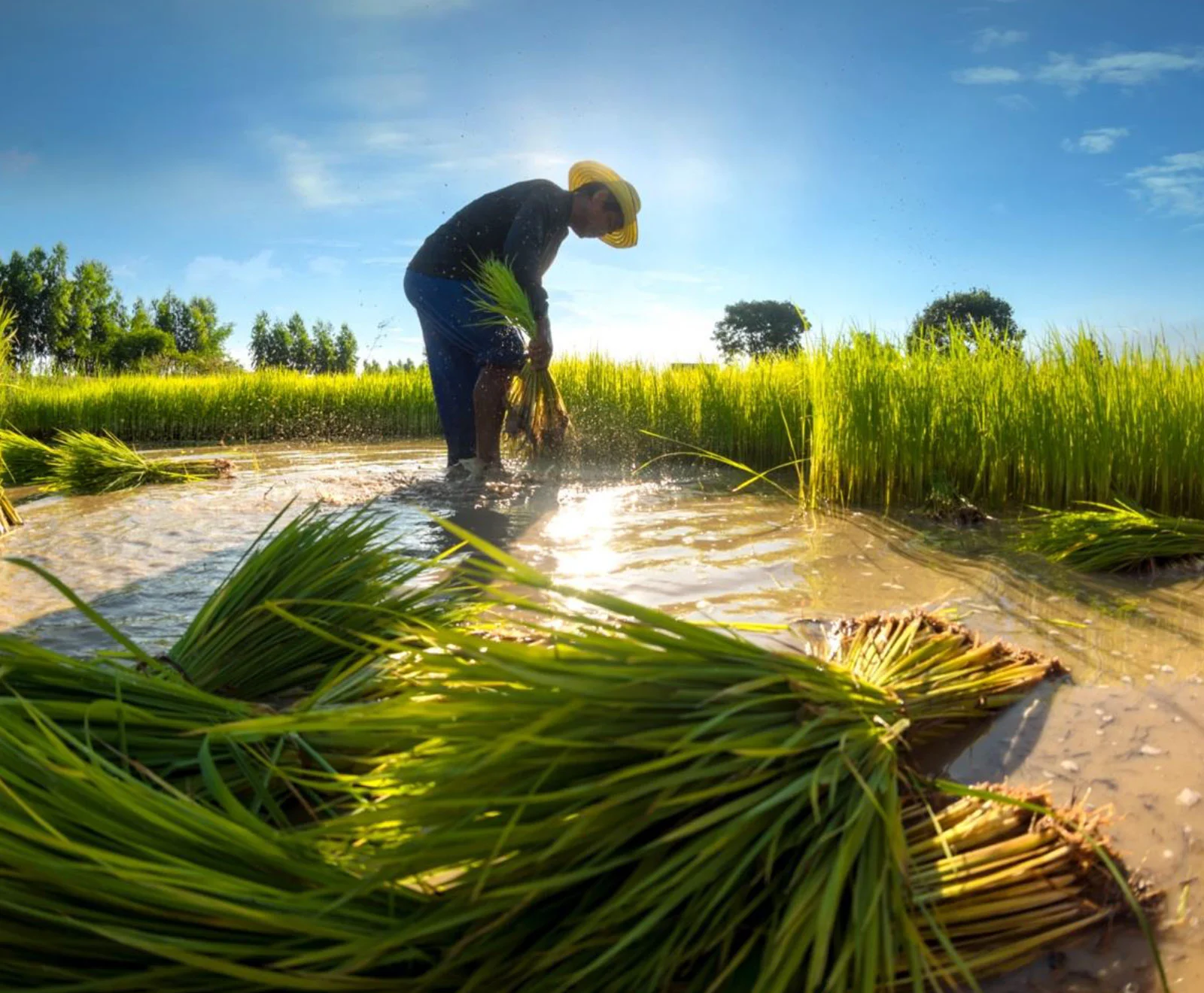
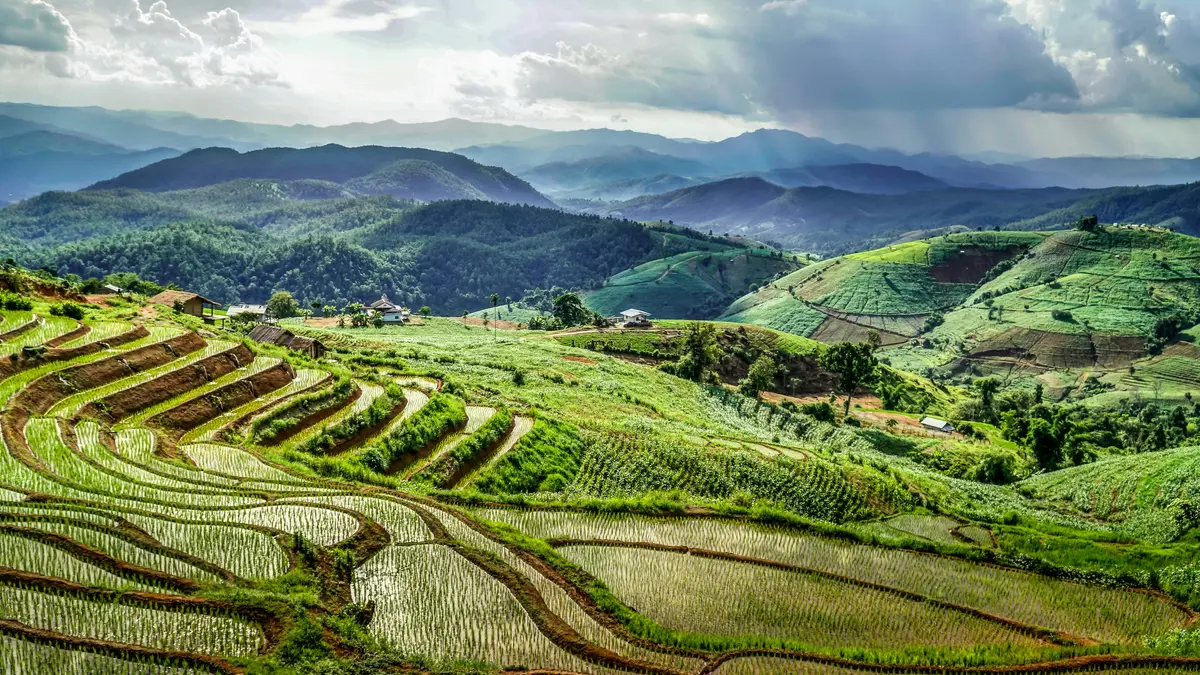
Rice is a staple for over half the world’s population and a key driver of rural livelihoods of over 1 billion people, yet its cultivation is a major source of greenhouse gas emissions and water use. Conventional cultivation practices release significant emissions (notably ~12% of global methane emissions) and have substantial environmental impacts globally on freshwater resources (consuming ~40% of global irrigation water), wetland ecosystems and biodiversity.
Sustainable rice production systems offer multiple benefits for climate, nature, and livelihoods. At WBCSD, we envision a global rice value chain that is climate-smart, nature-positive, economically resilient, and contributes positively to food and nutrition security. Through collaborative action and science-based solutions, we aim to transform rice fields and landscapes to support both planetary and human health. Our rice value chain initiatives are driving this change.
Rice Methane Action Alliance (RMA)
The Rice Methane Action Alliance (RMA) is a global, multi-stakeholder platform committed to accelerating the transition to low-emissions, climate-resilient rice production systems.
Sustainable Rice Landscapes Initiative
Our Sustainable Rice Landscapes Initiative (SRLI) seeks to deliver smart and sustainable solutions for rice farmers and those involved in rice supply chains.